
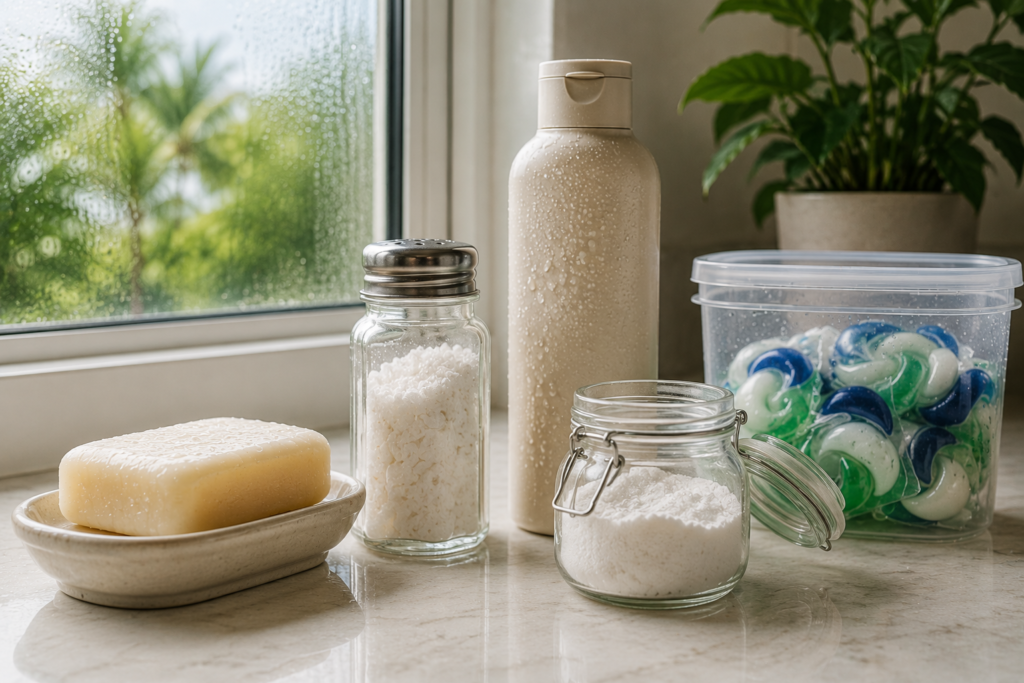
Most homeowners think of humidity as something they feel. Sticky air, damp towels, and that heavy feeling when the house never seems to fully dry out are usually easy to notice.
What many homeowners miss is how often high humidity shows up in the everyday products sitting throughout the home. Excess moisture quietly changes how products store, perform, and age—and some of the earliest signs of a humidity problem may be hiding in plain sight.
Sometimes the problem is not the product.
Bathroom and Personal Care Products Often Show Humidity Problems First
Bathrooms experience repeated spikes of warm moisture, making them one of the most humidity-sensitive spaces in the home. Even after mirrors clear and surfaces feel dry, excess moisture can remain suspended in the air much longer than most homeowners realize.
That lingering humidity often shows up first in personal care products.
Bar soap and liquid soap
A mushy bar of soap is one of the most obvious humidity clues in a home.
Most people assume soap softens simply because it gets wet during use. Water exposure certainly matters, but humidity often plays a much bigger role. Soap that never fully dries between uses stays soft, dissolves faster, and wastes product more quickly.
Liquid hand soap can show subtler changes. Residue buildup around pumps, sticky nozzles, and thickened product near the dispenser opening often happen faster in persistently humid bathrooms.
If soap repeatedly feels off, the more useful question may not be about the soap itself. It may be whether bathroom moisture is actually clearing.
Shampoo and conditioner
Shampoo and conditioner rarely “go bad” quickly, but high humidity can affect how they behave. Thick formulas containing oils, silicones, and conditioning agents often develop sticky buildup around caps and pumps when exposed to warm, humid air.
Over time, you may notice:
- residue around bottle openings
- inconsistent dispensing
- thicker or separated product near the cap
Most homeowners assume this is normal product mess. Sometimes it is. Sometimes it is also a clue that moisture is lingering longer than it should.
Lotion, creams, and ointments
Many lotions and creams are emulsions—a carefully balanced mixture of water and oil designed to remain stable under normal storage conditions. Heat and humidity can gradually affect that balance, especially in products opened frequently.
You may notice:
- separation
- grainy texture
- thickening or thinning
- uneven consistency
This becomes especially noticeable in jars, tubs, and frequently opened containers.
Powders and bath products
Powders are among the most humidity-sensitive personal care products because many absorb moisture directly from surrounding air.
Common examples include:
- body powder
- baby powder
- dry shampoo
- bath salts
- powdered facial products
Humidity often causes these products to clump, harden, or lose performance. Bath salts may fuse into solid masses. Powders may stop dispersing evenly.
These changes may seem minor, but they are often early warning signs of excess indoor moisture.
Kitchen Staples and Baking Ingredients Are Surprisingly Humidity-Sensitive
Many kitchen ingredients are highly hygroscopic, meaning they naturally absorb moisture from the air.
This makes kitchens and pantries one of the easiest places to spot humidity-related product changes.
Salt, baking soda, and baking powder
Salt is perhaps the classic example. When humidity rises, salt absorbs moisture and begins clumping. It stops pouring freely and may harden inside shakers or storage containers. The same thing happens with baking soda and baking powder.
That matters for more than convenience.
Baking ingredients that repeatedly absorb moisture can lose effectiveness over time, which may affect recipes in ways homeowners never connect to humidity. If baked goods suddenly stop rising as expected, storage conditions may be worth evaluating.
Flour, sugars, and dry baking ingredients
Flour, cornstarch, powdered sugar, brown sugar, and boxed baking mixes also respond quickly to excess moisture.
Common signs include:
- clumping
- hardening
- uneven texture
- stale smell
Brown sugar is especially sensitive because moisture changes can quickly turn it rock-hard.
Coffee, tea, and powders
Coffee loses freshness faster in humid environments because moisture accelerates degradation of aromatic compounds. Ground coffee is especially vulnerable.
Protein powders, powdered drink mixes, and cocoa powders also tend to clump significantly when humidity remains elevated.
A product may still technically be usable. That does not mean it is performing the same.
Laundry and Cleaning Products Are Commonly Overlooked
Laundry rooms and under-sink cabinets rarely get much attention in humidity discussions, yet many cleaning products are highly moisture-sensitive.
Laundry detergent and detergent pods
Powder detergents often clump or harden in humid environments, making them harder to measure and less likely to dissolve evenly.
Detergent pods are especially sensitive because their outer film is designed to dissolve in water.
Homeowners often notice:
- pods sticking together
- softening
- deforming
- rupturing prematurely
This isn’t just an appearance issue. It can affect how well the product performs.
Dish soap and dishwasher detergents
Liquid dish soap usually tolerates humidity fairly well, but dishwashing detergents—especially pods and powders—are far more sensitive.
Dishwasher tablets and pods may soften, clump, or partially stick together when stored in warm, humid kitchens.
This is especially common in cabinets near dishwashers or sinks where steam and moisture accumulate repeatedly.
Cleaning wipes and powdered cleaners
Cleaning wipes stored in humid environments may develop excess condensation or dry unevenly once repeatedly opened.
Powdered cleaners and additives such as borax or washing soda can harden significantly once they begin absorbing moisture.
When several cleaning products begin changing texture at once, the environment deserves attention.
Medications and Supplements Are More Sensitive Than Many Realize
This is one of the most overlooked household product categories. Many homeowners store medications, vitamins, and supplements in bathrooms or kitchens simply because those locations feel convenient.
Unfortunately, they are often poor storage environments.
Moisture-sensitive products include:
- capsules
- gummy vitamins
- probiotics
- electrolyte powders
- powdered supplements
Humidity can contribute to clumping, softening, sticking, reduced stability and efficacy.
This creates an important homeowner question many people never think to ask.
A product may not be expired.
But has it been stored in conditions that allowed it to remain stable until expiration?
That is a different question entirely.
Kids’ Products and Art Supplies Can Quietly Degrade
Parents often notice humidity effects before realizing it’s humidity thats causing the problems. Products tend to get blamed, when in reality, its the environment.
Paints, markers, crayons, and glue
Art supplies are surprisingly humidity-sensitive.
Paint can thicken or separate. Markers may dry unevenly. Glue can change consistency. Paper products may warp or curl.
Crayons and wax-based products may soften in warm, humid conditions, especially in homes where indoor temperatures fluctuate.
Play-Doh, clay, and craft materials
Play-Doh is a fantastic humidity indicator. Too dry, and it cracks. Too humid, and it becomes sticky, overly soft, or develops texture changes.
Kinetic sand, modeling clay, chalk, and other craft products behave similarly.
Pet Products Deserve More Attention
Pet products are rarely discussed in humidity conversations, but they should be.
Pet food and treats
Dry pet food absorbs moisture from surrounding air, affecting freshness, texture, and shelf life.
Homeowners may notice:
- softened kibble
- stale smell
- oily texture changes
- reduced crunch
Large bags stored in garages or laundry rooms are especially vulnerable.
Litter powders and deodorizing products
Powder-based litter additives and deodorizing products can also clump or harden when exposed to excess moisture.
This reduces effectiveness and may create odor-control issues homeowners mistakenly blame on the litter itself.
When Product Problems Point to a House Problem
A single symptom rarely proves a humidity issue.
Patterns matter.
When multiple household products begin softening, clumping, separating, hardening, or degrading faster than expected, the most important question may not be what happened to each product. It may be what is happening inside the home.
Common causes of elevated indoor humidity include:
- oversized air conditioning systems
- poor ventilation
- inadequate dehumidification
- drainage issues
- crawlspace moisture
- hidden leaks
- excessive indoor moisture generation
These problems often remain hidden while subtle product damage accumulates throughout the house.
Quick Reference: Products Commonly Affected by Humidity
| Product Category | Common Humidity Effect |
| Bar soap | Softening, faster breakdown |
| Salt / baking ingredients | Clumping, hardening |
| Laundry pods | Sticking, deforming |
| Dishwasher tablets | Softening, clumping |
| Vitamins / powders | Sticking, reduced stability |
| Art supplies | Separation, warping |
| Pet food | Softening, stale texture |
Frequently Asked Questions
At what humidity do household products start getting damaged?
Risk rises significantly once indoor humidity stays above 60% for extended periods, although highly sensitive products may show changes sooner.
Can air conditioning alone control humidity?
Not always. Oversized or short-cycling AC systems may cool effectively while leaving humidity elevated.
Why do products seem worse in summer?
Summer often brings higher outdoor moisture levels, forcing homes to manage a much heavier humidity load.
Can a dehumidifier help protect household products?
Yes. In persistently humid homes, dehumidification can improve product longevity while also improving comfort and reducing moisture-related damage.
The Bottom Line
High humidity affects more than comfort.
It changes how products store, how they perform, and how long they last. Some of that damage is obvious. Much of it develops gradually enough that homeowners never connect it to moisture.
If multiple everyday household products throughout your home are showing unusual wear, the problem may not be the products.
It may be the environment in your home.