
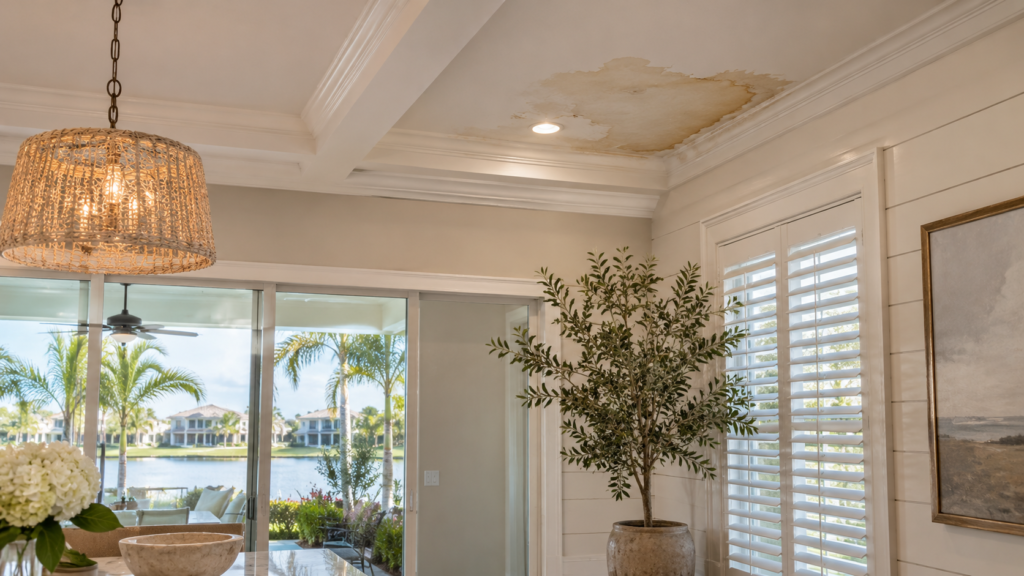
Moisture problems are not always accompanied by visible water damage. A home can appear clean, well-maintained, and structurally sound while excess moisture accumulates behind walls, beneath flooring, or within other concealed building materials.
In many cases, the earliest indications are subtle: a persistent musty odor, paint that begins to bubble, unexplained discoloration around a baseboard, or a room that consistently feels more humid than the rest of the house.
These conditions do not automatically indicate a serious moisture problem. However, they can provide valuable clues about how water is moving through a home and whether building materials are remaining damp longer than they should.
Understanding these warning signs can help homeowners distinguish ordinary household humidity from conditions that warrant further investigation.
Before contacting a moisture inspection company, mold assessor, or restoration contractor, it is often possible to gather meaningful information about the location, pattern, and potential source of excess moisture.
The objective is not to diagnose concealed damage without professional equipment. It is to understand what the home may be communicating—and recognize when the evidence suggests a problem that should not be ignored.
This article contains affiliate links. If you make a purchase through one of these links, The Humid House may earn a small commission at no additional cost to you.
Why Moisture Problems Are Often Difficult to Detect
Water can enter a home as liquid water or water vapor, and the resulting damage may occur far from the original source.
A small roof leak, for example, may allow rainwater to travel along framing members before appearing as a stain on an interior ceiling. A plumbing connection may leak intermittently, gradually wetting the materials inside a cabinet or wall cavity.
In other situations, there is no conventional leak at all.
Warm, humid air can enter an air-conditioned building through gaps in its exterior enclosure, also known as the building envelope. When moisture-laden air encounters sufficiently cool surfaces, condensation can occur.
The U.S. Department of Energy identifies uncontrolled air leakage, inadequate moisture management, and condensation as important contributors to building moisture problems.
This distinction matters because visible moisture damage is a symptom, not a diagnosis.
A discolored wall could be associated with rainwater intrusion, a plumbing leak, condensation, or a previous water event that has already been resolved.
The appropriate solution depends on identifying which mechanism is responsible.
The Four Main Sources of Residential Moisture Problems
Although individual situations vary, residential moisture problems generally originate from four broad categories.
| Moisture source | Common examples | Typical warning signs |
| Plumbing and appliance leaks | Supply lines, drain connections, water heaters, washing machines | Localized dampness, cabinet damage, recurring stains |
| Rainwater intrusion | Roof penetrations, windows, exterior walls, flashing failures | Stains after rainfall, damaged drywall, wet trim |
| Condensation | Cold ductwork, supply registers, windows, poorly insulated surfaces | Water droplets, localized staining, recurring surface moisture |
| Elevated indoor humidity | Inadequate moisture removal, humid outdoor-air infiltration, indoor moisture generation | Persistent muggy conditions, odors, condensation, widespread dampness |
These sources are not mutually exclusive.
A home with elevated indoor humidity may also have a small plumbing leak. Similarly, poor air sealing can contribute to localized condensation even when the central air-conditioning system appears to be operating normally.
A useful moisture investigation therefore considers both the conditions inside the home and the circumstances under which moisture becomes noticeable.
Early Signs of Moisture Problems Inside a Home
Many moisture-related changes begin at the surface of building materials.
Drywall, wood trim, cabinetry, flooring, and painted finishes can respond differently to repeated moisture exposure. Some materials absorb water and swell, while others lose adhesion, discolor, or deteriorate.
Recognizing these changes can help identify areas where moisture may be entering or accumulating.
Discoloration and Water Stains
Yellow, brown, or irregularly shaped stains on ceilings and walls are common indicators of previous or ongoing water exposure.
Ceiling stains may be associated with roof leaks, plumbing above the ceiling, or condensation involving HVAC equipment. Wall stains near windows or exterior doors may suggest water intrusion around openings.
However, staining alone cannot establish whether a material is currently wet.
A previous leak may leave permanent discoloration even after repairs and drying have been completed.
A stain that expands, darkens, or reappears following rainfall deserves more attention than an unchanged mark with a documented repair history.
The timing and progression of discoloration are often more informative than its appearance alone.
Peeling Paint, Bubbling, and Damaged Drywall
Paint that blisters or separates from the underlying surface can indicate moisture exposure, particularly when accompanied by soft drywall, staining, or persistent dampness.
Moisture moving through a wall assembly can interfere with paint adhesion and affect gypsum-based materials.
Not all peeling paint is caused by water intrusion. Surface preparation, incompatible coatings, and application conditions can also produce paint failures.
Nevertheless, recurring deterioration in the same location should not be treated as a cosmetic issue until moisture-related causes have been considered.
Simply repainting an affected surface may conceal evidence without correcting the condition responsible for it.
Swollen Baseboards, Trim, and Cabinetry
Wood and wood-based products respond to changes in moisture content.
Baseboards may swell along their lower edges, cabinet panels may develop raised seams, and doors or drawers may become difficult to operate.
Particleboard and medium-density fiberboard are particularly vulnerable to swelling when exposed to liquid water.
Areas beneath kitchen sinks, around bathroom vanities, near exterior doors, and adjacent to appliances are especially relevant because they contain common sources of water exposure.
Swelling that remains after a material has dried may represent permanent damage rather than an active leak.
However, new or progressively worsening changes can suggest that moisture exposure is continuing.
Musty or Earthy Odors
A persistent musty odor can be an important indicator of damp conditions, even when visible damage is absent.
Odors associated with microbial activity may develop in locations where moisture accumulates, including enclosed cabinets, wall cavities, flooring assemblies, and poorly ventilated spaces.
An odor alone does not establish the presence, type, or extent of mold growth. Building materials, stored belongings, and other indoor sources can produce similar smells.
The location and persistence of the odor are useful observations.
A musty smell concentrated near one wall, cabinet, or room may justify a more targeted investigation than a temporary odor occurring after ordinary household activities.
Air fresheners and deodorizing products may mask the smell, but they do not address a moisture source.
What Indoor Humidity Can Reveal About Hidden Moisture Problems
Indoor relative humidity is an important part of evaluating a home’s moisture conditions, but it represents only one piece of the overall picture.
A digital hygrometer, such as the TempPro TP50, provides a simple way to monitor indoor temperature and relative humidity.
Relative humidity describes the amount of water vapor in the air compared with the maximum amount the air could hold at the same temperature.
The U.S. Environmental Protection Agency recommends keeping indoor relative humidity below 60%, ideally between 30% and 50% when practical.
Consistently elevated humidity can increase the potential for condensation and create conditions favorable to microbial growth on vulnerable surfaces.
However, a normal humidity reading does not guarantee that a home is free from moisture problems.
A concealed plumbing leak may wet drywall without producing a meaningful increase in the relative humidity measured across the room.
Likewise, condensation can develop on a sufficiently cold surface even when the room’s overall humidity appears acceptable.
Interpreting Indoor Humidity Readings
| Indoor relative humidity | General interpretation |
| Below 30% | Relatively dry conditions; comfort and climate considerations may become relevant |
| 30-50% | EPA’s preferred indoor range when practical |
| 51-59% | Above the ideal range; persistent readings deserve monitoring |
| 60-69% | Elevated humidity that warrants investigation |
| 70% or higher | Substantially elevated humidity requiring prompt attention to moisture sources and control |
These categories are general screening guidance, not diagnostic boundaries.
A single elevated reading after showering, cooking, or opening exterior doors is different from a home that remains above 60% relative humidity throughout the day.
Measurements also depend on temperature, instrument accuracy, placement, and the length of time the instrument has adjusted to its surroundings.
Patterns are generally more useful than isolated measurements.
A bedroom that consistently measures significantly higher than nearby conditioned rooms may suggest differences in airflow, moisture generation, HVAC performance, or outdoor-air infiltration.
However, differences between rooms do not identify a specific defect without additional information.
Why Humidity Problems Can Be Especially Misleading in Florida
In hot-humid climates, air conditioning serves two related purposes: lowering indoor air temperature and removing moisture.
These functions do not always occur at the same rate.
A home may reach its thermostat setpoint before the cooling system has removed enough moisture to maintain comfortable indoor conditions.
Possible contributors include oversized cooling equipment, short operating cycles, inadequate airflow, excessive outdoor-air infiltration, and poorly controlled ventilation systems.
Temperature and humidity can therefore tell different stories.
A Florida home maintained at 73°F may still feel uncomfortable if indoor relative humidity remains elevated.
For this reason, humidity should be evaluated alongside HVAC operation, outdoor conditions, and other evidence—not simply the thermostat setting.
Where Hidden Moisture Problems Commonly Develop
Although moisture damage can occur throughout a building, certain locations are more susceptible because of their plumbing connections, exposure to weather, temperature differences, or construction details.
Understanding these locations can help narrow the scope of a potential problem.
Bathrooms and Kitchens
Bathrooms and kitchens combine frequent moisture generation with numerous water connections.
In bathrooms, water can escape through failed shower seals, plumbing connections, damaged grout assemblies, or compromised waterproofing systems.
Grout and tile are not substitutes for properly installed waterproofing beneath wet-area finishes.
A bathroom may therefore appear visually intact while moisture travels into adjacent materials through a failed underlying assembly.
Kitchen moisture problems frequently involve sink connections, dishwasher supply or drain lines, refrigerator water lines, and concealed plumbing.
Moisture beneath cabinetry may remain unnoticed because the affected surfaces are outside normal sightlines.
Recurring cabinet swelling, deteriorating toe kicks, and localized odors can provide useful clues.
Exterior Walls and Window Openings
Windows, doors, wall penetrations, and exterior cladding transitions are common locations for water intrusion.
The building envelope is intended to manage rainwater and direct incidental moisture away from vulnerable materials.
When flashing, drainage details, sealants, or other components fail, water may enter the wall assembly.
An important distinction is that exterior caulking is only one part of a properly designed water-management system.
Repeatedly applying sealant over an opening without understanding how the surrounding assembly drains may temporarily hide symptoms without correcting the underlying defect.
Moisture damage that appears after wind-driven rain is particularly relevant when evaluating exterior openings.
Ceilings and Attic-Adjacent Areas
Moisture staining on a ceiling may be associated with a roof leak, plumbing, or an air-conditioning component located above the finished surface.
In humid climates, attic-related problems can also involve air leakage and condensation.
Warm, moisture-laden air moving through building cavities may encounter surfaces cold enough for condensation, particularly around improperly insulated or sealed HVAC components.
The location of a ceiling stain does not necessarily correspond to the point where water first entered.
Water can travel along framing, pipes, and other concealed surfaces before becoming visible.
Any suspected attic inspection should account for electrical hazards, exposed wiring, unsafe footing, insulation, and heat exposure. Homeowners should not enter unsafe or inaccessible attic areas to investigate a stain.
Flooring and Baseboards
Flooring systems can conceal moisture originating from plumbing leaks, exterior intrusion, slab-related moisture, or condensation.
Depending on the flooring material and installation, warning signs may include cupping, buckling, discoloration, adhesive failure, or persistent odors.
Wood flooring can change shape as moisture content varies across its thickness.
Laminate and engineered flooring products may exhibit swelling at joints or edges.
In slab-on-grade homes, moisture-related flooring problems can also involve moisture moving through concrete or failures involving flooring installation and moisture control.
A surface that feels dry does not necessarily indicate that the underlying assembly is dry.
Likewise, a flooring defect does not establish whether the cause is an active water source, previous damage, or an installation problem.
Understanding Condensation Versus Water Intrusion
One of the most important distinctions in residential moisture investigations is whether water is entering as a liquid or forming through condensation.
Condensation occurs when moisture-containing air contacts a surface at or below the air’s dew-point temperature.
The dew point depends on the amount of water vapor in the air.
When a surface becomes sufficiently cold, water vapor can condense into liquid water.
In air-conditioned homes, this process may occur around poorly insulated ductwork, cold supply registers, piping, or other surfaces exposed to humid air.
A recurring moisture stain near an air-conditioning register, for example, may result from condensation rather than a roof or plumbing leak.
Conversely, a stain that appears only after heavy rain may point more strongly toward exterior water intrusion.
Clues That Help Differentiate Moisture Sources
| Observation | Possible explanation | Important limitation |
| Staining appears after rainfall | Roof or exterior water intrusion | Water may travel before becoming visible |
| Moisture develops around cold HVAC components | Condensation | Leaks and other causes must still be excluded |
| Dampness is concentrated beneath a sink | Plumbing or drain connection | Previous damage may remain after a leak stops |
| Multiple rooms remain humid | HVAC, ventilation, or infiltration issue | Indoor activities and weather also influence readings |
| Flooring changes near an exterior wall | Exterior intrusion, slab moisture, or localized leak | Flooring damage alone cannot identify the source |
| Musty odor persists without visible damage | Concealed dampness or microbial activity | Odor is not confirmation of mold |
These observations are useful for developing possible explanations, but none should be treated as a definitive diagnosis.
A reliable moisture investigation considers multiple forms of evidence rather than attributing a problem to the first plausible source.
Can a Moisture Meter Detect Water Behind Walls?
Moisture meters can provide useful information when evaluating suspected water-damaged building materials.
However, their capabilities are frequently misunderstood.
A moisture meter does not directly locate a plumbing leak, identify mold, or determine the precise source of water.
Instead, it evaluates a physical property associated with moisture within or near the material being tested.
Different meter technologies operate differently.
Pin-Type Moisture Meters
Pin-type meters use metal probes to measure electrical resistance between contact points.
For homeowners who prefer direct contact measurements, a pin-type moisture meter such as the General Tools MMD4E offers another option.
Because electrical resistance changes with moisture content and material characteristics, the instrument can estimate moisture conditions in compatible materials.
Some meters provide calibrated moisture-content measurements for specific wood species or material settings.
Readings from drywall and other nonwood materials may instead be expressed on a relative or reference scale.
The measurement depth and interpretation depend on the meter and probe configuration.
Pinless Moisture Meters
Pinless meters use electromagnetic sensing to evaluate conditions beneath the contact surface without puncturing the material.
The Klein Tools ET140 is one example designed for noninvasive moisture screening in drywall, masonry, and wood.
They can be useful for screening larger accessible areas and comparing locations with similar construction.
However, metal fasteners, pipes, corner beads, material density, and differences in construction can influence readings.
A high reading does not automatically confirm water intrusion.
The most informative use often involves comparing a suspicious area against an apparently unaffected area made from the same material.
Why Moisture Meter Numbers Need Context
A reading from drywall should not be interpreted using a universal moisture-percentage threshold intended for wood.
Many consumer meters display relative scales that are specific to the instrument.
Similarly, readings from tile, concrete, plaster, and layered wall assemblies may be affected by the underlying construction.
For homeowners, a moisture meter is best understood as a screening instrument rather than a stand-alone diagnostic tool.
Unexpected readings can help determine where additional investigation may be appropriate, but interpretation should follow the manufacturer’s instructions and the characteristics of the material being tested.
Can Thermal Cameras Reveal Hidden Water Damage?
Infrared thermal cameras are sometimes marketed as tools capable of seeing water behind walls.
That description is misleading.
A thermal camera detects differences in apparent surface temperature. It does not directly detect moisture, identify mold, or see through a wall.
Wet materials can sometimes display temperature differences because of evaporative cooling or changes in thermal behavior.
However, many non-moisture conditions produce similar patterns.
These include:
- Missing or uneven insulation
- Air leakage
- HVAC duct locations
- Sun exposure
- Framing members
- Differences in building materials
A cool area on a thermal image may warrant investigation, but it does not prove that a wall is wet.
Professional moisture assessments often combine thermal imaging with moisture meters, visual observations, building history, and other testing methods.
Thermal imaging is most useful when interpreted as one part of a larger investigation.
How to Tell Whether a Moisture Problem Is Active or Historical
One of the more difficult aspects of evaluating water damage is determining whether moisture exposure is ongoing.
A home may contain visible evidence of a previous leak long after the affected materials have dried.
Water stains, swollen trim, and damaged flooring do not always return to their original appearance after drying.
This means that cosmetic damage and active moisture are not necessarily the same condition.
Several patterns can help distinguish them.
Signs That May Suggest Ongoing Moisture Exposure
A moisture problem may still be active when discoloration expands, materials remain damp, odors persist, or damage worsens over time.
A recurring stain following rainfall or repeated plumbing use is also important.
Similarly, humidity that remains elevated despite normal moisture-control operation can indicate an unresolved source or equipment problem.
Signs That May Indicate Previous Damage
A stable stain with a documented repair history, unchanged material damage, and no evidence of recurring moisture may be consistent with an earlier water event.
However, the absence of new visible damage is not proof that concealed materials are dry.
When the condition of a hidden assembly matters—particularly before replacing finishes or completing repairs—appropriate moisture verification may be necessary.
The distinction has practical consequences.
Replacing damaged drywall before addressing an active leak can result in repeated deterioration. Conversely, assuming that every old stain represents an ongoing leak may lead to unnecessary work.
When Homeowners Should Call a Moisture Professional
Not every suspicious mark or humidity fluctuation requires an expensive whole-house inspection.
A small, clearly identified plumbing leak may be more appropriately addressed by a licensed plumber than by a company offering generalized moisture testing.
Similarly, persistent high humidity without visible water damage may justify an HVAC performance evaluation.
The appropriate professional depends on the most likely source of the problem.
Matching the Problem to the Appropriate Professional
| Primary concern | Appropriate professional |
| Suspected supply or drain leak | Licensed plumber |
| Water staining following rainfall | Qualified roofing or building-envelope contractor |
| Persistent elevated indoor humidity | HVAC contractor experienced in humidity control |
| Condensation around ductwork or air-conditioning components | Qualified HVAC contractor |
| Unexplained moisture in walls or flooring | Independent moisture or building-envelope inspector |
| Significant mold growth or concealed contamination | Qualified mold assessor or remediation professional, as appropriate |
| Structural deterioration from prolonged moisture exposure | Qualified structural engineer or relevant building specialist |
Professional evaluation becomes particularly important when moisture is widespread, concealed, recurring, or difficult to associate with an identifiable source.
Prompt assistance is also appropriate when water involves sewage, contaminated floodwater, electrical components, or extensive wet building materials.
The EPA recommends drying wet materials within approximately 24–48 hours when possible to reduce the likelihood of mold growth.
This timeframe is important because investigating the cause should not delay necessary water removal or drying.
Why the Type of Inspection Matters
A general home inspection and a specialized moisture investigation are not necessarily equivalent.
A specialized assessment may involve material moisture measurements, thermal imaging, evaluation of drainage and building-envelope details, and examination of conditions associated with HVAC performance.
The appropriate scope depends on the reported symptoms and construction of the home.
Homeowners should understand what an inspection includes, whether destructive testing is proposed, and what evidence will be used to support the conclusions.
When possible, an independent assessment can also help distinguish investigative findings from a contractor’s proposal to perform repairs.
Why Mold Testing Is Not Always the Best Starting Point
Homeowners sometimes associate musty odors, elevated humidity, or unexplained stains with the need for mold testing.
However, the first priority in a moisture investigation is typically determining whether excess moisture is present and identifying its source.
The EPA explains that visible mold growth generally does not require sampling to establish that a mold problem exists.
Testing may be useful under particular circumstances, but air sampling alone does not identify the cause of water intrusion or determine whether an assembly is dry.
A laboratory result also cannot replace an investigation of the conditions supporting microbial growth.
If moisture continues to enter a wall or accumulate beneath flooring, removing visible mold without addressing the water source may allow the problem to return.
This is why moisture control is central to effective mold prevention.
For homes with unexplained odors or suspected concealed growth, a qualified professional can determine whether additional investigation or sampling would provide useful information.
Common Mistakes When Investigating Home Moisture Problems
Some of the most expensive moisture repairs begin with an understandable but incorrect assumption about the source of a problem.
Assuming Normal Humidity Means the Home Is Dry
Room humidity measurements describe airborne moisture, not the condition of every wall, floor, or concealed cavity.
A home can maintain acceptable indoor humidity while an isolated plumbing leak damages surrounding materials.
Treating Every Stain as an Active Leak
Water stains can remain after a leak has been repaired.
The presence of discoloration alone does not establish ongoing moisture exposure.
Changes over time and supporting evidence are necessary to determine whether additional repairs are needed.
Using a Dehumidifier to Address Every Moisture Problem
Dehumidifiers remove water vapor from indoor air.
They do not repair roof leaks, plumbing failures, or exterior drainage defects.
A dehumidifier may improve indoor humidity while a separate liquid-water problem remains unresolved.
Painting Over Moisture-Damaged Materials
Paint and stain-blocking primers can improve the appearance of previously damaged surfaces, but they should not be used to conceal active moisture problems.
Wet materials need appropriate drying, and the source of water must be corrected before cosmetic restoration.
Relying on One Instrument Reading
Neither a single hygrometer reading nor a moisture meter measurement can fully characterize a home’s moisture conditions.
Meaningful conclusions depend on the material being evaluated, environmental conditions, inspection history, and other supporting evidence.
How to Reduce the Risk of Future Moisture Problems
Preventing moisture damage requires controlling both liquid water and water vapor.
For most homes, effective moisture management involves coordinated performance across the roof, exterior walls, drainage systems, plumbing, HVAC equipment, and ventilation.
Routine maintenance can reduce the likelihood that small problems become extensive repairs.
Exterior drainage should direct water away from the building rather than allowing it to accumulate near foundations or exterior walls.
Plumbing and appliance connections should remain free of leaks.
Air-conditioning systems should provide adequate moisture removal, with condensate drainage components maintained according to manufacturer requirements.
Bathroom and kitchen exhaust systems should remove moisture appropriately, and outdoor air should be introduced through ventilation strategies suited to the climate and building.
In humid regions, opening windows is not always an effective method of reducing indoor moisture. Outdoor air may contain substantially more water vapor than the conditioned air indoors.
Long-term moisture control therefore requires more than lowering a thermostat or operating a portable dehumidifier.
It depends on how the building manages water, heat, airflow, and drying.
Frequently Asked Questions
How can I tell if there is moisture behind my walls?
Possible warning signs include recurring discoloration, bubbling paint, swollen trim, soft drywall, and persistent musty odors.
Moisture meters may help identify suspicious areas, but readings must be interpreted according to the instrument and building material.
Concealed moisture cannot always be confirmed without professional investigation.
Can a house have hidden water damage without visible stains?
Yes. Moisture can accumulate within wall cavities, flooring assemblies, cabinetry, and other concealed spaces before visible deterioration appears.
The absence of staining does not guarantee that every building material is dry.
What indoor humidity level indicates a moisture problem?
The EPA recommends keeping indoor relative humidity below 60%, ideally between 30% and 50% when practical.
Repeated measurements above 60% warrant attention, especially when accompanied by condensation, odors, or other evidence of dampness.
However, humidity measurements alone do not diagnose water damage.
Can a moisture meter find mold?
No. A moisture meter measures properties associated with moisture in building materials, not mold itself.
It may help identify areas where moisture conditions could support microbial growth, but it cannot establish whether mold is present or identify its species.
Is a musty smell always a sign of mold?
No. Musty odors can be associated with microbial activity or damp materials, but odors alone cannot establish a mold diagnosis.
Persistent or localized odors deserve attention because they may indicate moisture accumulating somewhere that is not readily visible.
Should I hire a mold inspector or a moisture inspector first?
The best choice depends on the evidence.
If the primary concern is unexplained dampness, recurring water damage, or suspected water intrusion, identifying the moisture source is generally the priority.
If significant mold growth or suspected concealed contamination is present, a qualified mold assessor may be appropriate.
Some investigations require expertise in both moisture intrusion and microbial contamination.
The Bottom Line
Hidden moisture problems rarely provide a complete explanation of their source.
A stain may reveal where water became visible, not where it entered. A musty odor may indicate damp conditions without identifying the affected material. Elevated indoor humidity may suggest inadequate moisture removal while an unrelated plumbing leak remains concealed.
For homeowners, the most useful approach is to recognize patterns rather than rely on individual symptoms.
The location of damage, its relationship to rainfall or plumbing use, changes over time, humidity conditions, and the behavior of affected materials can all provide meaningful information.
Basic observations and appropriate moisture-monitoring tools can help determine whether a concern is isolated, recurring, or potentially more extensive.
They cannot, however, replace professional evaluation when water intrusion is concealed, the cause remains uncertain, or significant damage is suspected.
The goal is not simply to find evidence of moisture. It is to understand why that moisture is present and whether the home can manage it without continuing damage.
Identifying the source before beginning repairs is often the difference between correcting a moisture problem and repeatedly treating its symptoms.
Sources and Further Reading
The following authoritative resources support the building-science principles and recommendations discussed in this article.
- U.S. Environmental Protection Agency (EPA) — A Brief Guide to Mold, Moisture and Your Home. Guidance on indoor humidity, moisture prevention, mold growth, and drying water-damaged materials.
- U.S. Environmental Protection Agency (EPA) — Mold Course: Chapter 2. Explanation of moisture movement, condensation, indoor humidity, and building-material moisture problems.
- U.S. Environmental Protection Agency (EPA) — Interactive Mold House Tour. Examples of common residential moisture sources and concealed water damage.
- U.S. Department of Energy (DOE) — Consumer Guide to Home Ventilation. Guidance on ventilation, condensation, air leakage, and moisture management.
- U.S. Department of Energy (DOE) — Consumer Guide to Air Sealing the Home. Explanation of how uncontrolled air leakage affects moisture management, comfort, and building performance.
- U.S. Environmental Protection Agency (EPA) — What Are Ten Things I Need to Know About Mold?. Guidance on moisture control, mold prevention, and prompt drying following water exposure.