
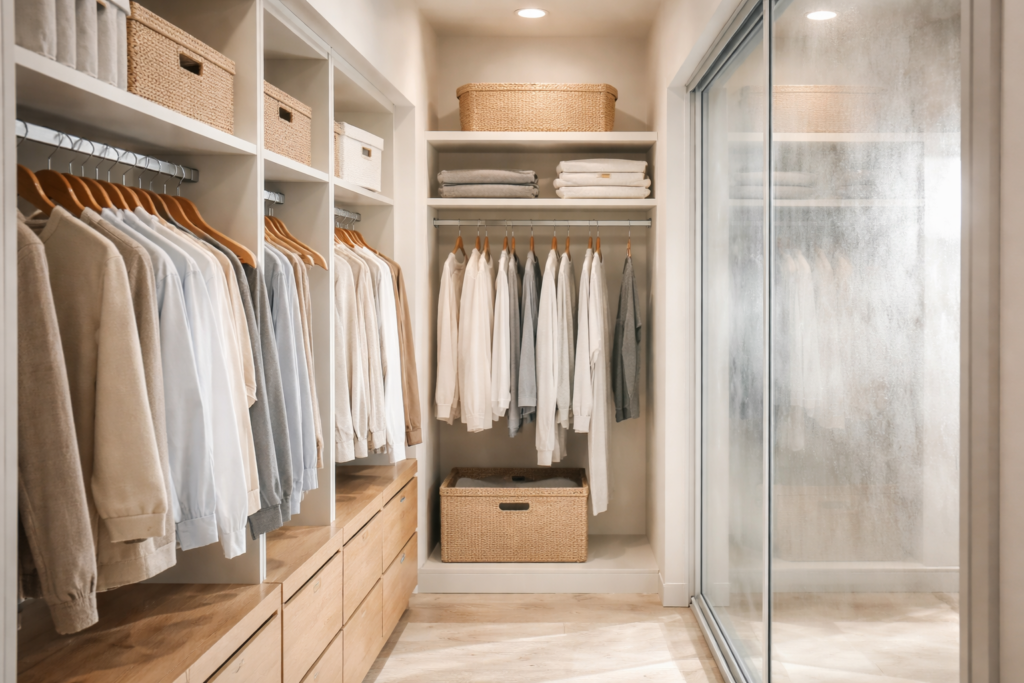
Closets are one of the most common places in humid homes to develop musty smells, even when the rest of the house seems dry and clean. Many homeowners assume the problem is dirty clothes, old shoes, or poor cleaning, but in humid climates, musty closets are usually caused by airflow, humidity, and moisture trapped in enclosed spaces, not cleanliness.
Understanding why closets develop musty odors in humid homes requires looking at how humidity behaves inside enclosed spaces, how materials like fabric absorb moisture, and why closets often become small humidity pockets inside otherwise air-conditioned homes.
What Causes Musty Smells in Closets
Humid and smells are usually caused by microbial growth (mold or mildew) or bacteria that develop when materials remain slightly damp for long periods of time. In closets, the most common sources are:
- Clothing and fabrics
- Shoes
- Carpet or closet flooring
- Drywall
- Wood shelving
- Cardboard storage boxes
- Leather items
- Bags and luggage
Closets often smell musty because these materials absorb moisture from the air, even if they don’t feel wet.
In humid climates, materials rarely fully dry unless air is moving around them.
Why Closets Get Musty in Humid Homes
Closets are especially prone to musty smells because they combine three conditions that humidity needs to cause problems:
| Closet Condition | Why It Causes Musty Smells |
| Low airflow | Moist air gets trapped and cannot dry out materials |
| Absorbent materials | Clothes, shoes, carpet, and wood absorb moisture from air |
| Closed doors | Prevents air circulation and moisture removal |
| Cooler air | Closets can be slightly cooler, increasing condensation risk |
| Stored items packed tightly | Prevents airflow between fabrics and items |
| Located on exterior walls | Exterior walls can be slightly cooler and collect moisture |
Closets are essentially small enclosed environments, and in humid climates, enclosed spaces almost always become more humid than open rooms.
How Humidity Builds Up Inside Closets
Even when air conditioning is running, closets often become more humid than the rest of the home because air conditioning only removes moisture from air that moves through the system.
Closets usually have:
- No air vents
- No return air
- Closed doors
- Little air movement
This means closet air can become stale and humid, even if the rest of the house feels comfortable.
The process usually looks like this:
- Humid air enters the closet when the door is opened.
- The door closes and air becomes trapped.
- Moisture in the air absorbs into clothes and materials.
- Without airflow, materials never fully dry.
- Over time,mold spores and bacteria begin to grow.
- Musty smell develops.
This is why closets often smell musty even when clothes are clean.
Why Clothes and Fabrics Absorb Moisture in Humid Homes
Many homeowners don’t realize that fabric constantly absorbs and releases moisture from the air. This is called hygroscopic behavior, and materials like cotton, wool, cardboard, and wood absorb moisture very easily.
In humid environments:
- Clothes absorb moisture from the air
- Shoes absorb moisture
- Cardboard absorbs moisture
- Leather absorbs moisture
- Carpet absorbs moisture
If airflow is low, these materials never fully dry, which creates the perfect environment for musty smells.
Professional Perspective on Closet Moisture and Mold
According to building and indoor air professionals, enclosed spaces are one of the most common places for hidden mold and odor issues in humid homes.
“Closets, storage areas, and other enclosed spaces often develop mold and musty odors because they have limited airflow and materials that absorb moisture. Even when the rest of the home is air conditioned, these small enclosed areas can remain humid enough for mold growth. Improving airflow and reducing moisture in enclosed spaces is one of the most effective ways to prevent odor and mold problems in humid climates.”
— Indoor air quality and building moisture professionals
This is why musty closets are extremely common in humid regions, coastal areas, and homes with high indoor humidity.
Signs Your Closet Has a Humidity Problem
Common signs include:
- Musty smell on clothes
- Shoes smell musty
- Leather items smell musty
- Clothes feel slightly damp
- Mold spots on shoes or bags
- Warped cardboard boxes
- Rust on metal hangers
- Mold on closet walls or ceiling
- Carpet smells musty
- Closet smells worse when door first opens
These are usually humidity problems, not cleaning problems.
How to Prevent Musty Closets in Humid Homes
The goal is not just odor control — the goal is reducing humidity and increasing airflow.
The most effective strategies include:
- Leave closet doors open periodically
- Avoid packing clothes tightly
- Do not store damp clothes or towels
- Use wire shelving instead of solid shelves
- Avoid cardboard boxes
- Use breathable storage bins
- Ensure closet is not on a cold exterior wall without insulation
- Improve overall home humidity control
- Use small closet dehumidifiers if needed
- Ensure HVAC system is properly removing humidity
- Avoid storing shoes directly on carpet
- Use airflow gaps behind shelving
The biggest improvement usually comes from airflow, not cleaning products.
Closet Conditions and Musty Smell Risk
| Closet Condition | Musty Smell Risk |
| Door always closed | High |
| Packed tightly with clothes | High |
| Located on exterior wall | Medium High |
| Carpeted closet | Medium High |
| No airflow | High |
| Wire shelving + airflow | Low |
| Door opened regularly | Low |
| Dehumidified home | Low |
When Musty Closets May Indicate a Bigger Humidity Problem
Closets smelling musty occasionally is common in humid climates, but persistent musty smells may indicate:
- Indoor humidity consistently above ~60%
- HVAC not removing enough moisture
- Poor airflow in home
- Exterior wall moisture
- Roof or wall leak
- Mold inside wall cavity
- Damp carpet or flooring
- Crawlspace humidity
- Poor insulation
- Negative pressure drawing humid air into walls
If multiple closets smell musty, the issue is often house humidity, not the closet itself.
Frequently Asked Questions
Is a musty closet always mold?
Not always. Musty smells are often caused by bacteria and mildew growing on fabrics, leather, carpet, or wood due to moisture in the air. However, persistent musty smells can indicate mold somewhere in the closet or wall.
Why do clean clothes smell musty in the closet?
Clean clothes can absorb moisture from humid air while stored in a closet. If airflow is low, the clothes never fully dry and develop a musty odor over time.
Are closet deodorizers enough to fix musty smells?
No. Deodorizers mask odors but do not remove moisture. Musty closets are almost always a humidity and airflow problem, not an odor problem.
Should closet doors be left open in humid climates?
Leaving closet doors open periodically can significantly reduce humidity buildup and prevent musty smells.
Do closet dehumidifiers work?
Small closet dehumidifiers or desiccant moisture absorbers can help, but improving airflow and controlling whole-home humidity is usually more effective.
The Bottom Line
Closets get musty in humid homes because they are small enclosed spaces with low airflow and moisture-absorbing materials like clothing, carpet, and wood. Even when the rest of the house is air conditioned, closets often trap humid air, allowing fabrics and materials to absorb moisture and develop musty odors over time.
Preventing musty closets is usually not about cleaning more — it’s about airflow, humidity control, and how materials behave in humid environments. In humid climates, closets are one of the most common places for moisture and odor problems, but improving airflow and reducing humidity can usually prevent the issue long-term.