
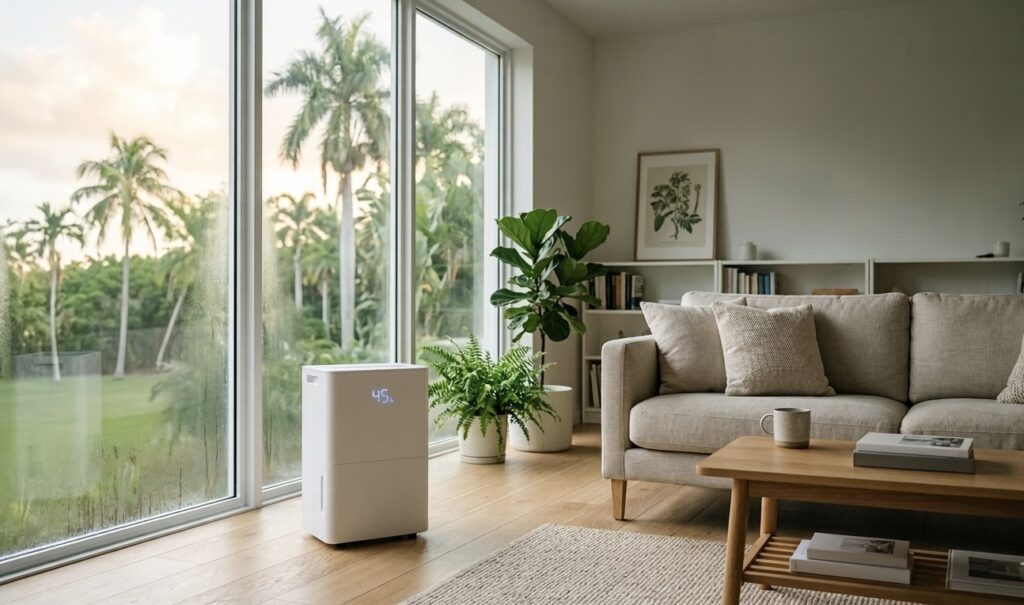
In humid climates, homeowners often assume that if the air conditioner is running normally, indoor humidity should already be under control. Air conditioning systems remove moisture from the air as they cool, and in many homes this process is enough to maintain comfortable indoor conditions. Yet some homes still feel damp or slightly sticky even while temperatures remain comfortable.
This situation can be confusing. If the air conditioner cools the home effectively, why would humidity remain elevated? The answer lies in how moisture behaves inside buildings. Air conditioners reduce humidity only when they run long enough for condensation to occur on the cooling coil. When cooling cycles are short or moisture enters the home faster than it can be removed, humidity can remain higher than intended.
Understanding when air conditioning alone is sufficient and when additional dehumidification becomes useful requires looking at both indoor humidity levels and how the home’s cooling system operates.
This article contains affiliate links. If you make a purchase through one of these links, The Humid House may earn a small commission at no additional cost to you.
How Air Conditioning Removes Moisture
Air conditioners remove moisture through condensation. When warm indoor air passes across the evaporator coil inside the system, water vapor condenses on the cold coil surface and drains away.
The amount of moisture removed depends largely on run time. Longer cooling cycles allow more air to pass across the coil, increasing the amount of condensation that forms and drains away.
When cooling demand is steady — such as during hot summer afternoons — air conditioners often remove substantial moisture. This is why many homes maintain comfortable humidity during the hottest parts of the day.
However, because air conditioning systems are designed primarily to control temperature, humidity removal depends on how the system cycles. When cooling cycles are short or infrequent, moisture removal may decrease.
Why Humidity Sometimes Remains High Indoors
Outdoor air in humid climates often contains large amounts of moisture. As that air enters the home through ventilation, door openings, or small air leaks in the building envelope, humidity is continually introduced indoors.
In homes with an attached garage, garage humidity can also become part of that moisture load when humid garage air moves through gaps around the connecting door, shared walls, ceilings, or other penetrations.
If the air conditioner does not run long enough to remove that incoming moisture, humidity levels can gradually rise.
Several common conditions influence how effectively air conditioning manages humidity
| Condition | How It Influences Moisture Removal |
| Short cooling cycles | System shuts off before significant condensation occurs |
| Oversized AC systems | Home cools quickly, limiting moisture removal time |
| Mild but humid weather | Cooling demand drops but humidity remains high |
| Nighttime humidity increases | Outdoor moisture rises while cooling demand falls |
| Moisture entering the home | Air leakage and ventilation add humidity |
These patterns explain why some homes may feel comfortable during peak heat but noticeably more humid during evenings or mild weather periods.
When Homes in Humid Climates Often Need a Dehumidifier
In many homes, air conditioning alone manages indoor humidity effectively. However, certain conditions make it more difficult for cooling systems to remove moisture at the same rate it enters the home.
Homes in humid climates are most likely to benefit from additional dehumidification when indoor humidity consistently remains elevated despite normal air conditioner operation.
Situations where this commonly occurs include:
• Indoor humidity regularly remains above about 55–60 percent even when the air conditioner runs normally
• Air conditioners cool the home very quickly, resulting in short cooling cycles that limit moisture removal
• Periods of mild but humid weather, when temperatures do not require long cooling cycles but moisture levels remain high
• Nighttime humidity increases, when outdoor moisture rises and air conditioners run less frequently
• Homes near water or coastal environments, where outdoor air contains consistently high moisture levels
• Homes with large indoor moisture loads, such as frequent showers, cooking, or laundry
In these situations, the challenge is not temperature control but moisture balance. When humidity enters the home faster than the air conditioner removes it, indoor humidity levels may remain elevated.
A dehumidifier can remove moisture independently of cooling cycles, allowing humidity to be controlled even when the air conditioner runs infrequently.
Even with a dedicated dehumidifier, indoor humidity may remain elevated if the unit is undersized, airflow is restricted, or moisture continues entering the home. Our guide Dehumidifier Running but Humidity Not Going Down? Causes and Solutions, explains how to identify and correct problems.
Signs Indoor Humidity May Be Staying Too High
Humidity levels are not always obvious at first. While temperature changes are easy to notice, moisture levels often increase gradually.
Homeowners sometimes begin to recognize elevated humidity through environmental clues inside the home.
Examples may include:
• Air that feels slightly sticky despite comfortable temperatures
• Musty odors appearing during humid weather
• Bathrooms or closets that remain damp longer than expected
• Electronic devices showing signs of corrosion, condensation, or unexplained performance issues.
• Condensation forming on windows or cool surfaces
• Mold appearing repeatedly in humid areas
These observations do not automatically mean that a home requires a dehumidifier. However, they can indicate that moisture is lingering longer than intended.
Indoor humidity measurements often provide clearer insight. In many homes, maintaining relative humidity between about 40 and 50 percent helps indoor surfaces dry efficiently between humidity cycles.
If you are unsure whether your thermostat is accurately reflecting indoor humidity, a separate digital hygrometer like the ThermoPro TP50 can provide a useful comparison.
Conditions That Make Humidity Harder for AC to Control
Some homes encounter structural or environmental conditions that make moisture removal more difficult for cooling systems.
Homes most likely to experience persistent humidity often share several characteristics
Home Condition | Why Humidity May Persist |
| Oversized HVAC equipment | Cooling occurs too quickly for adequate moisture removal |
| Highly sealed newer homes | Less natural drying airflow between humidity cycles |
| Homes near water | Outdoor air carries consistently high moisture |
| Homes with low cooling demand | AC runs less frequently during mild weather |
| High indoor moisture generation | Showers, cooking, and laundry add humidity |
These factors do not automatically mean that a home will require a dehumidifier, but they increase the likelihood that humidity may remain elevated.
Air Conditioners and Dehumidifiers: How They Differ
Although both systems influence indoor moisture, they operate in different ways
| Feature | Air Conditioner | Dehumidifier |
| Primary purpose | Cooling air | Removing moisture |
| Moisture removal | Occurs during cooling cycles | Operates independently of cooling |
| Best suited for | Temperature control | Humidity control |
| Operation trigger | Thermostat | Humidity level |
| Comfort effect | Lowers temperature | Reduces dampness in the air |
For homes that need supplemental humidity control, look for a dehumidifier with an adjustable humidistat and enough capacity for the area being treated. The Midea Cute 35-Pint and Frigidaire 35-Pint are both strong options for localized humidity control.
Why Moisture Control Matters in Homes
Indoor environmental research consistently emphasizes that moisture control is central to maintaining stable indoor conditions.
According to the U.S. Environmental Protection Agency, moisture management plays a critical role in preventing indoor environmental problems:
Moisture control is the key to mold control. When moisture accumulates in buildings or on building materials, mold growth will often occur, particularly if the moisture problem remains undiscovered or unaddressed.
This perspective reinforces why understanding humidity behavior inside homes is important. Moisture levels often reveal how indoor environments are functioning over time.
Frequently Asked Questions
What indoor humidity level is considered too high for a home?
Indoor humidity above roughly 55 to 60 percent relative humidity is often where homes begin to feel noticeably damp or muggy. At these levels, moisture in the air can slow drying on indoor surfaces and increase the likelihood that condensation may form in cooler areas of the home. Many building science recommendations suggest maintaining indoor humidity between about 40 and 50 percent when possible, which generally supports both comfort and surface drying.
Can air conditioning alone control humidity in humid climates?
In many homes, yes. When an air conditioning system is properly sized and runs consistent cooling cycles, it can remove a meaningful amount of moisture through condensation on the cooling coil. Homes with steady cooling demand during warm seasons often maintain balanced humidity levels through air conditioning alone. Additional dehumidification becomes more relevant when humidity remains elevated despite normal cooling operation.
Why does my home feel humid even when the air conditioner is running?
This often occurs when cooling cycles are too short to remove significant moisture from the air. If the system cools the home quickly and shuts off, the amount of air passing across the cooling coil may not be enough to remove incoming moisture. Humidity may also increase during mild weather or nighttime hours when cooling demand drops but outdoor humidity remains high.
Does running fans reduce humidity in a home?
Fans improve air movement and can make rooms feel more comfortable by increasing evaporation from skin and surfaces. However, fans do not remove moisture from the air itself. They simply circulate existing air within the space. Reducing humidity requires either removing moisture through condensation or exchanging indoor air with drier outdoor air when conditions allow.
The Bottom Line
Air conditioners remove moisture as they cool a home, and in many humid climates this process is sufficient to maintain comfortable indoor humidity levels. However, some homes experience humidity patterns that cooling cycles alone do not fully address.
Homes in humid climates are most likely to benefit from a dehumidifier when indoor humidity consistently remains above about 55–60 percent despite normal air conditioner operation, particularly during mild weather, nighttime humidity increases, or when cooling cycles are short.
In these situations, additional dehumidification can help stabilize indoor moisture levels by removing humidity independently of temperature control. Understanding how humidity behaves inside a home allows homeowners to interpret whether moisture levels are being effectively managed — or whether additional moisture control may help restore balance.