
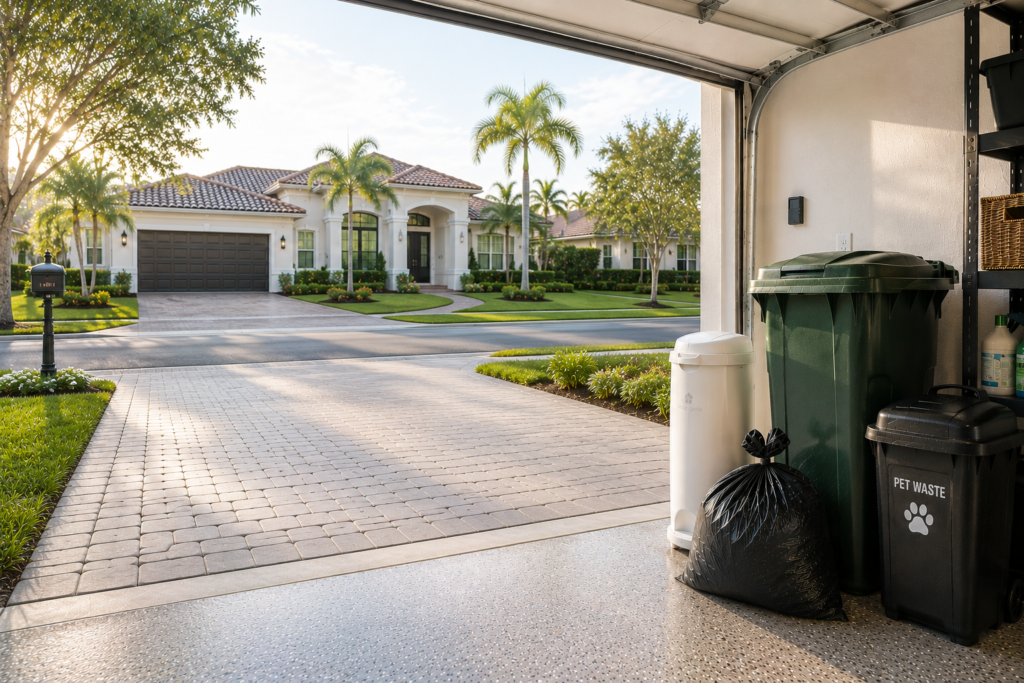
Many homeowners notice that trash smells stronger, outdoor bins become harder to manage, diaper pails seem to develop odor faster, and flies suddenly appear much more aggressively during humid weather.
In many cases, the issue is not poor cleaning habits or low-quality containers. Humid climates simply change how organic waste behaves. Warm temperatures, elevated moisture levels, stagnant garage air, and slower drying conditions create an environment where bacteria, decomposition, and odors accelerate much faster than many people expect.
Why Humidity Changes How Waste Behaves
Most household trash contains organic material. Food scraps, diapers, pet waste, paper towels, coffee grounds, and other everyday garbage all naturally contain bacteria and moisture.
Humidity changes the environment surrounding that material.
In dry conditions, moisture evaporates more easily from waste and surrounding surfaces. In humid climates, the air already contains large amounts of water vapor, which slows evaporation and allows moisture to remain trapped longer inside trash bags, bins, diaper pails, and outdoor containers.
That combination of warmth and retained moisture creates ideal conditions for bacterial activity and decomposition.
As bacteria break down organic material, they release gases that create strong odors. In humid environments, those odors also tend to linger longer instead of dissipating quickly into drier air.
The result is often:
- stronger smells
- faster odor buildup
- increased fly activity
- and garbage areas that seem difficult to fully freshen
Why Garages Often Become the Biggest Problem Area
Garages are one of the most common places homeowners store:
- trash bins
- diaper pails
- recycling
- and pet waste containers
Unfortunately, garages in humid climates often create extremely difficult conditions for waste storage.
Even shaded garages can trap:
- high temperatures
- stagnant air
- retained humidity
- and radiant heat from roofs, walls, and concrete floors
During summer, garages frequently become much hotter than many homeowners realize, especially in attached garages with limited airflow.
When organic waste sits in that environment, decomposition accelerates significantly. Heat and humidity together create ideal conditions for odor buildup and bacterial activity.
This is one reason many homeowners notice that:
- garage trash smells stronger than expected
- diaper pails become difficult to control
- or outdoor bins suddenly attract flies much faster during humid weather
Why Sealed Containers Still Smell
Many people assume sealed trash cans or diaper pails should completely stop odors.
In humid climates, sealed containers can still struggle because the odor buildup is happening inside the container itself.
Warm organic material trapped in an enclosed space creates:
- concentrated moisture
- trapped heat
- bacterial growth
- and accumulated odor gases
Every time the lid opens, those concentrated odors are released all at once.
Humidity can also contribute to condensation and lingering moisture inside containers, especially during warm weather. Small amounts of trapped moisture along lids, seams, liners, or interior surfaces may continue feeding odor-producing bacteria over time.
Plastic bins can also gradually absorb odors when repeatedly exposed to warm organic waste in humid environments.
That is why many containers continue smelling even after:
- changing liners
- cleaning surfaces
- or using deodorizers
Why Flies and Bugs Become More Aggressive Around Trash
One of the most frustrating parts of humid-climate waste storage is how quickly flies appear around garbage, pet waste, and diaper pails.
Warm temperatures accelerate insect activity and reproduction. Humid environments also support faster decomposition, which increases the odor compounds that attract insects.
Organic waste naturally releases gases as it breaks down. In warm humid weather, that process speeds up substantially.
This is why:
- outdoor garbage cans may attract flies within days
- pet waste bins become harder to manage during summer
- and garage trash areas may develop recurring fly problems even when cleaned regularly
In humid climates, waste often reaches odor-producing stages much faster than many homeowners expect.
Why Pet Waste Often Smells Much Worse in Humid Weather
Pet waste is especially sensitive to heat and humidity.
Dog waste bags stored in garages or outdoor bins continue breaking down after disposal. In warm humid conditions, bacterial activity remains highly active, which intensifies odor quickly.
Many homeowners notice this most during:
- summer afternoons
- rainy periods
- or stretches of persistently humid weather
Outdoor pet waste bins exposed to sunlight can become especially difficult because heat builds rapidly inside the container.
Even covered bins may continue trapping humid air internally, allowing odors to compound between trash pickup days.
Why Diaper Pails Become So Difficult in Humid Homes
Diaper pails are another common frustration in humid climates, especially for new parents.
Diapers naturally contain moisture and organic material. In warm humid conditions, that combination can create rapid odor buildup inside enclosed pails.
Many parents notice that:
- odors become stronger during summer
- diaper pails seem harder to keep fresh
- or pails stored in garages become overwhelming much faster than expected
This is often related to environmental conditions rather than simply the quality of the diaper pail itself.
Warm air, retained moisture, and enclosed spaces allow bacterial activity and odor concentration to increase more rapidly in humid homes.
Why Some Household Habits Stop Working During Humid Weather
Many homeowners notice that routines which normally work well become less effective during humid months.
Trash may need to be emptied more frequently. Garage bins may require more cleaning. Odors may return faster after washing containers.
This happens because humid environments slow drying and accelerate decomposition at the same time.
Even small amounts of residue left inside:
- trash cans
- diaper pails
- or pet waste bins
can continue producing odors when warmth and moisture remain trapped together
Some people also notice this more strongly after moving from drier climates, where waste tends to dry out more quickly and odors dissipate faster. But even lifelong residents of humid regions commonly struggle with these issues during hotter months.
What Actually Helps in Humid Homes
Completely eliminating trash odors is rarely realistic in persistently humid climates, especially during summer.
However, several environmental adjustments can help reduce buildup significantly.
Reduce Heat Exposure
Keeping bins out of direct sunlight or away from the hottest areas of the garage can help slow decomposition and odor development.
Increase Airflow
Garages with stagnant air tend to trap humidity and odors longer.
Improving airflow with ventilation or fans may help reduce heat and moisture buildup around stored waste.
Empty Waste More Frequently
In humid climates, allowing organic waste to sit for extended periods often leads to much faster odor accumulation.
More frequent removal can help reduce buildup before odors intensify.
Clean Interior Surfaces Regularly
Odors often linger because residue remains on:
- lids
- seams
- bin bottoms
- and interior walls
Warm humid conditions allow even small amounts of organic residue to continue producing odor.
Reduce Excess Moisture
Leaking trash bags, damp paper towels, food liquids, and wet waste can intensify bacterial activity in humid conditions.
Reducing excess moisture inside bins may help slow odor development.
Professional Perspective
The United States Environmental Protection Agency notes that warm, damp environments support microbial growth and moisture-related odor problems more readily than drier conditions. In humid climates, retained moisture and elevated temperatures can intensify biological activity around everyday organic materials, including household waste.
That is one reason odor and pest problems around trash, diaper pails, and pet waste often become more noticeable during warm humid weather.
Common Waste Problems in Humid Climates
| Household Issue | Why Humidity Makes It Worse |
| Kitchen trash odors | Food residue breaks down faster in warm moist air |
| Diaper pails | Heat and trapped moisture intensify odor buildup |
| Pet waste bins | Warm humid conditions accelerate decomposition |
| Outdoor garbage cans | Heat buildup concentrates odors rapidly |
| Garage trash storage | Stagnant humid air slows drying and traps smells |
| Fly activity | Warm humid environments support faster insect activity |
| Lingering bin smells | Moisture and residue remain active longer |
Frequently Asked Questions
Why does trash smell stronger in humid weather?
Humidity slows evaporation and allows moisture to remain trapped longer around organic waste. Warm temperatures also accelerate bacterial activity and decomposition.
Why do sealed diaper pails still smell so strong?
Sealed pails trap concentrated heat, moisture, and odor gases together inside the container. Opening the lid releases that concentrated buildup all at once.
Why are flies appearing around my garbage can so quickly?
Warm humid conditions accelerate decomposition and increase the odor compounds that attract flies and other insects.
Why does my garage trash smell worse than my kitchen trash?
Garages often become much hotter and more humid than indoor conditioned spaces, especially during summer.
Is this normal in humid climates?
Yes. Warm temperatures and elevated humidity commonly intensify odors, decomposition, and pest activity around household waste.
The Bottom Line
Trash, diaper pails, and pet waste often become more difficult to manage in humid climates because heat, moisture, and stagnant air accelerate decomposition and intensify odors.
For many homeowners, the issue is not poor cleaning habits or low-quality containers. Humid environments simply change how organic waste behaves.