
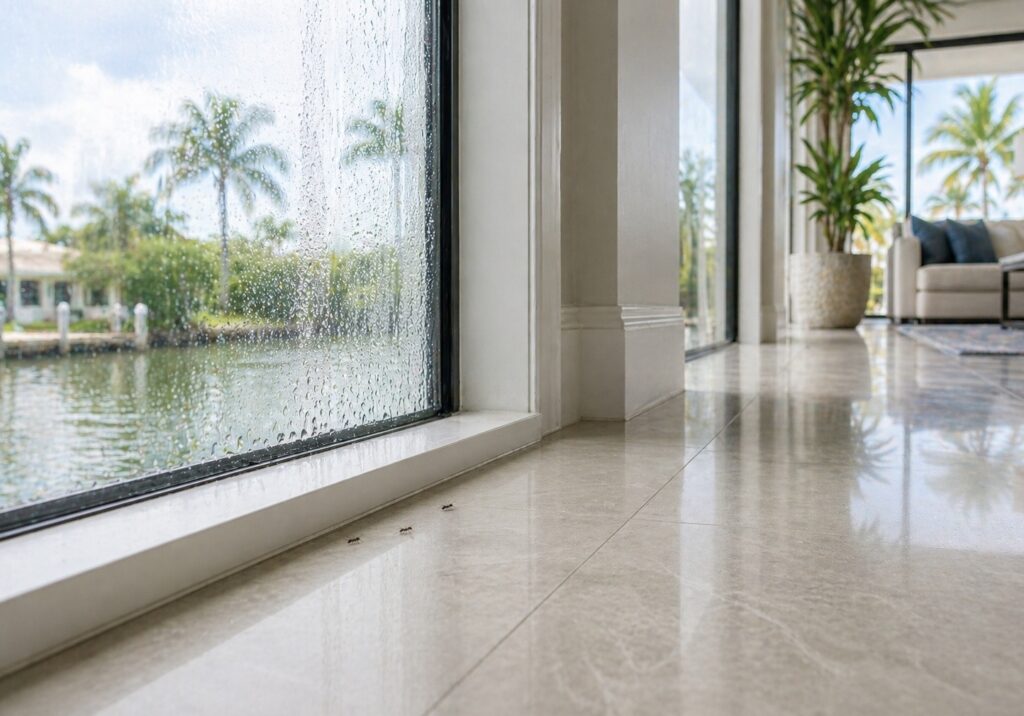
A noticeable increase in bugs indoors rarely happens without a reason. In humid climates, that reason is often built into how the home itself behaves. Moisture changes how air moves, how surfaces dry, and how materials hold water—quietly creating conditions that make it easier for insects to enter, survive, and return.
This is why bug problems can persist even when a home is clean and regularly treated. The visible issue is insects, but the underlying driver is environmental. When moisture remains available in the air and in materials, it lowers the barrier for insects to live indoors instead of just passing through.
This article contains affiliate links. If you make a purchase through one of these links, The Humid House may earn a small commission at no additional cost to you.
How Humidity Changes the Indoor Environment at a Physical Level
Humidity is not just “moist air.” It directly affects evaporation, temperature balance, and material behavior inside a home.
When relative humidity rises:
- Evaporation slows down — Water from showers, cooking, and cleaning lingers longer on surfaces
- Materials absorb and retain moisture — Wood, drywall, grout, and fabrics hold small amounts of water
- Moisture remains available longer — Damp surfaces, condensation, and humid micro-environments can provide the water some insects need to survive.
These changes create a home that is not visibly wet, but is consistently usable from a biological standpoint.
Insects are not reacting to clutter or dirt first—they are responding to whether the environment can support life.
Why Moisture Matters More Than Food for Many Household Bugs
A common assumption is that bugs are primarily attracted to food. In reality, for many species, water is the limiting factor, not food.
In humid homes:
- Ants often enter seeking water first, then expand to food sources
- Cockroaches can survive on minimal organic residue but require moisture to persist
- Silverfish depend on high humidity to prevent dehydration
- Gnats and drain flies rely on moist environments for breeding
This explains why bugs can appear even in well-maintained kitchens or bathrooms. If moisture is consistently available, insects don’t need ideal food conditions to remain.
How Micro-Environments Form Inside Humid Homes
Most insect activity is not happening in open, visible spaces. It’s happening in micro-environments—small areas where moisture persists just enough to matter.
These form when:
- Airflow is limited
- Surfaces don’t fully dry between moisture cycles
- Temperature differences create localized condensation
Over time, these areas become stable habitats.
| Area | Why It Supports Bugs | What’s Actually Happening |
| Bathroom grout & caulk | Absorbs moisture repeatedly | Holds water below the surface even when dry to the touch |
| Under sinks | Enclosed, low airflow | Traps humidity or small leaks over time |
| Behind appliances | Warm + limited airflow | Slower drying creates stable moisture pockets |
| Closets | Minimal air circulation | Humidity remains elevated compared to open rooms |
| Around vents | Temperature differences | Condensation or localized humidity forms |
These are not obvious problem areas, which is why bug activity can feel unpredictable.
Why Bugs Keep Coming Back After You Treat Them
Recurring bugs usually indicate that the environment still supports them.
Most pest control methods are designed to:
- Kill active insects
- Disrupt visible populations
They do not change:
- Humidity levels
- Moisture stored in materials
- Drying speed of surfaces
As a result, once treatment fades, the same conditions allow insects to return or new ones to enter. This creates a cycle that feels like re-infestation but is actually ongoing environmental suitability.
The Role of Indoor Humidity Levels
There is no single indoor humidity threshold that determines whether household pests will survive. In general, higher humidity and persistent moisture make conditions more favorable for moisture-dependent pests such as cockroaches, silverfish, and drain flies. Keeping indoor humidity under control can make the home less hospitable, especially when combined with fixing leaks and improving drying.
Why Some Homes Have More Bugs Than Others
Two homes in the same neighborhood can experience very different bug activity because of how they manage moisture.
Differences often come from:
- HVAC performance and runtime
- Ventilation effectiveness in bathrooms and kitchens
- Frequency of moisture introduction (showers, laundry, cooking)
- Presence of small leaks or condensation points
These factors determine whether a home dries quickly or stays slightly damp. That difference is often enough to change whether insects treat the home as temporary or livable.
Common Bugs That Increase in Humid Homes
Certain insects are especially sensitive to humidity levels.
| Bug Type | Why Humidity Helps Them | Where You’ll See Them |
| Ants | Need moisture to sustain colonies | Kitchens, bathrooms, baseboards |
| Cockroaches | Thrive in damp, warm areas | Under sinks, appliances |
| Silverfish | Require high humidity to survive | Bathrooms, closets |
| Gnats / Fruit flies | Breed in moist organic matter | Drains, trash, damp surfaces |
| Drain flies | Depend on wet biofilm | Sink and shower drains |
| Termites (subterranean) | Require moisture to survive | Structural wood near moisture |
What Actually Reduces Bugs in a Humid Home
Reducing bug activity helps but long term control requires changing the conditions that support them, not just removing them.
Lower Indoor Humidity
- Aim for 45–55% relative humidity
- Use dehumidification if AC alone isn’t sufficient
- Measure with a hygrometer instead of estimating
Improve Drying Speed
- Run bathroom fans during and after use
- Keep shower doors or curtains open
- Increase airflow in enclosed spaces
Address Hidden Moisture
- Check under sinks and behind appliances
- Look for slow leaks or recurring damp areas
- Pay attention to musty odors
Maintain Drains and Organic Moisture Sources
- Clean drains to remove buildup
- Avoid leaving damp organic material indoors
- Keep trash areas dry and sealed
Seal Entry Points
- Inspect door and window seals
- Seal small gaps where humidity causes expansion and contraction
Insect killer
- Insect killer such as Ortho Home Defense can help reduce current insects while actively changing the environmental conditions to prevent reccurrance.
Why Moisture Control Matters
Indoor insect activity is strongly influenced by environmental conditions, especially moisture availability. When indoor humidity remains elevated, some pests can survive more easily and remain indoors longer. For recurring problems, moisture control can be an important part of pest management alongside direct treatment.
When It’s Worth Looking Closer
Some insect presence is normal in humid climates. Patterns are what matter.
Pay closer attention if you notice:
- Bugs returning quickly after treatment
- Activity concentrated in damp or slow-drying areas
- Multiple types of insects appearing at once
- Persistent musty odors alongside bug activity
These signals usually point to moisture conditions rather than isolated pest problems.
Frequently Asked Questions
Why do I have bugs even though my house is clean?
Cleanliness helps reduce food sources, but many insects prioritize moisture. If humidity is high, insects can survive without ideal food conditions, especially in hidden areas.
Does running the AC get rid of bugs?
Air conditioning can reduce indoor humidity, but pest activity may continue if damp areas, leaks, condensation, or other moisture sources remain.
Why do bugs show up more in bathrooms and kitchens?
These areas introduce frequent moisture and often don’t fully dry between uses. That creates stable environments insects can use, even if surfaces appear clean.
Will pest control alone fix the problem?
It can reduce current activity, but without addressing moisture, bugs are likely to return. Long-term reduction usually requires both environmental control and treatment.
What humidity level prevents bugs?
There is no exact humidity level that prevents household pests, but keeping indoor humidity under control and reducing persistent dampness can make the environment less favorable for many moisture-dependent insects.
Bottom Line
An increase in bugs in a humid home is not random and not just a cleanliness issue. It reflects a shift in how the indoor environment functions. When moisture is consistently available—whether in the air or within materials—it allows insects to survive and return.
Changing those conditions by controlling humidity and improving drying is what reduces the cycle long-term.