
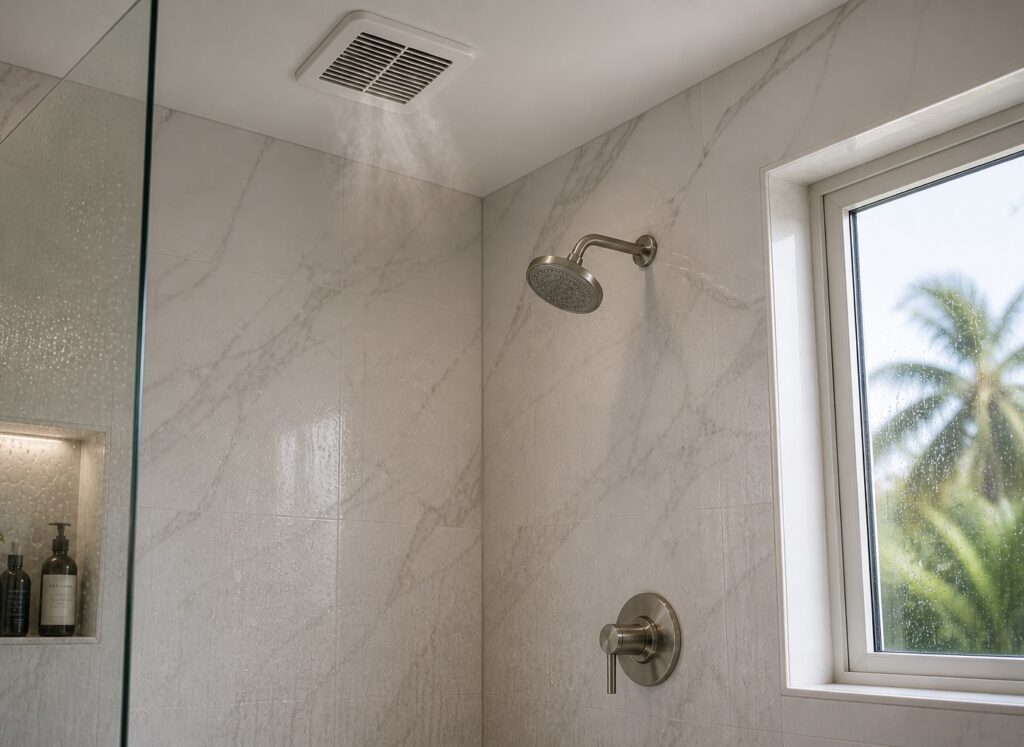
Mold in bathrooms often returns even when the exhaust fan is used consistently. The surface may dry faster, but moisture doesn’t always leave the space the way people expect.
In humid conditions, the air already holds a high level of moisture, which limits how much additional moisture the fan can remove. Water can remain in grout lines, corners, and behind surfaces where airflow is weaker, allowing mold to reappear even when ventilation is in place.
This article contains affiliate links. If you make a purchase through one of these links, The Humid House may earn a small commission at no additional cost to you.
Why does bathroom mold keep coming back even with an exhaust fan?
Seeing mold return after you thought you’d fixed it is frustrating. Many people assume that running a fan is enough—but mold only needs a few conditions to grow, and fans don’t always remove them all. Even bathroom fans can develop mold if conditions are right. Warmth, moisture, and something to feed on can let mold thrive even with ventilation.
How can mold grow in a bathroom while the fan is running?
Mold needs three things: moisture, warmth, and an organic surface to feed on. Showers and baths produce lots of moisture, and if the fan doesn’t move enough air or isn’t positioned to capture damp air, humidity will linger. Spores land on damp towels, grout, paint, or caulk and can begin growing once conditions are right.
What common fan issues let mold come back?
Bathroom exhaust fans can fail in several predictable ways. Typical problems include:
- Undersized fans : If a fan’s airflow (measured in cubic feet per minute, or CFM) is too low for the room, it won’t clear humid air fast enough. The Home Ventilating Institute recommends roughly 1 CFM per square foot of bathroom space as a basic guideline.
- Poor installation : A fan that’s incorrectly installed can leak air into walls or the attic, or simply fail to pull air from the wettest parts of the room.
- Lack of maintenance : Dust and lint build-up reduce a fan’s effectiveness. Cleaning the grille and motor area regularly keeps airflow at the level you need.
If your existing exhaust fan is undersized, struggling to clear moisture, or due for a replacement, a humidity-sensing model can make ventilation more consistent. The Panasonic WhisperFit DC with Condensation Sensor offers selectable 50, 80, or 110 CFM airflow and automatically responds to elevated moisture levels. Fan capacity should still be selected based on the size and ventilation needs of your bathroom.
How does poor bathroom ventilation make mold stick around?
When air can’t move freely, humidity stays high and surfaces remain damp—ideal conditions for mold. Poor ventilation allows moisture to accumulate where it’s out of sight, and that’s when mold establishes itself and returns after cleaning.
What signs point to inadequate venting or airflow?
- Musty smells: A persistent damp or musty odor can point to excess moisture or slow drying, but odor alone does not confirm mold.
- Visible mold : Spots on walls, ceilings, or around fixtures are obvious indicators of moisture problems.
- Noisy or struggling fan : Unusual sounds can mean the fan is overworked, clogged, or failing to perform.
How do undersized or poorly installed fans worsen mold problems?
A fan that’s too small won’t remove enough humid air after a shower. Installation mistakes—like venting into an attic or through an interior wall—can send moist air into cavities where it condenses and feeds hidden mold growth. Proper sizing and correct external venting are key to avoiding these issues.
Ventilation is only part of the story. Hidden leaks, degraded grout, and condensation can all supply the steady moisture mold needs. Finding and fixing these sources is essential to stopping mold for good.
How do plumbing leaks and failing grout cause hidden mold?
Even slow or intermittent plumbing leaks can wet wall cavities, floors, or cabinetry—places you don’t see during routine cleaning. Cracked or deteriorating grout lets water penetrate tile assemblies, creating damp pockets where mold can develop out of sight. Regular checks and timely repairs reduce these risks.
Why does condensation on cold surfaces matter, even with a fan?
Condensation forms whenever warm, moist air hits a cold surface—tile, metal fixtures, or poorly insulated walls. That moisture can pool and stay long enough for mold to take hold, so insulating cold surfaces and improving air circulation help reduce condensation risk.
How can you manage bathroom humidity to prevent mold?
Keeping humidity under control is one of the most effective ways to prevent mold. Small adjustments make a big difference.
What indoor humidity range helps stop mold growth?
As a general goal, keep indoor relative humidity below about 60%, with lower levels often improving comfort and drying when practical. A hygrometer can help you see whether humidity remains elevated after bathing.
For a simple way to monitor conditions independently of your thermostat or HVAC controls, the ThermoPro TP50 provides temperature and relative-humidity readings in a compact standalone display.
How do dehumidifiers and humidistats help prevent mold?
A dehumidifier can remove excess moisture from the air in damp bathrooms, helping you stay in the recommended humidity range. Humidistats (humidity sensors) can automate fans or dehumidifiers so the system only runs when needed—saving energy while keeping conditions unfriendly to mold.
What prevention steps work besides running a fan?
Fans are important, but they’re most effective when combined with routine care and the right materials. Small habits and upgrades go a long way.
How does regular cleaning and drying cut mold risk?
Wiping down wet surfaces after use, hanging towels to dry, and laundering bath mats promptly remove the moisture mold needs to grow. Use cleaning products with mold-inhibiting properties on grout and caulk for extra protection.
What part do mold-resistant materials and sealants play?
Choosing mold-resistant grout, paint, and caulk reduces the chance that mold will take hold on treated surfaces. Applying a good sealant to grout lines and joints also helps prevent water from penetrating assemblies where it can cause hidden mold.
When should you call a professional about persistent bathroom mold?
If mold keeps returning despite your best efforts, a professional inspection can identify hidden sources and recommend safe, effective remediation.
What health risks are tied to recurring bathroom mold?
Mold exposure can cause allergic or respiratory symptoms in some people and may worsen asthma in sensitive individuals. Reactions vary from person to person. If recurring mold is accompanied by health concerns, those symptoms should be discussed with a qualified healthcare professional while the moisture source in the home is investigated and corrected.
How do professionals find and remove hidden mold?
Remediation pros use thorough inspections, moisture meters, and specialized equipment to locate and remove mold safely. They’ll check behind walls, under floors, and in attics and can recommend fixes—like repairing leaks, improving ventilation, or replacing damaged materials—to prevent recurrence.
| Source of Moisture | Impact on Mold Growth | Prevention Strategies |
|---|---|---|
| Plumbing Leaks | Creates damp conditions behind walls | Regular inspections and repairs |
| Deteriorating Grout | Allows water infiltration | Use mold-resistant grout and sealants |
| Condensation | Provides moisture on cold surfaces | Insulate surfaces and use dehumidifiers |
Frequently Asked Questions
What are the best practices for maintaining bathroom exhaust fans?
Keep the fan and grille clean—every few months remove dust and lint so airflow stays strong. Test the fan periodically to make sure it runs quietly and efficiently. If your bathroom is large or the fan feels weak, upgrade to a higher-CFM model and ensure it vents outside rather than into an attic or wall cavity.
How can I tell if my bathroom has hidden mold?
Look for persistent musty odors, unexplained water stains, peeling paint, or mold in seldom-seen spots like behind cabinets or under vanities. A moisture meter can reveal elevated dampness in walls or floors; if you suspect hidden growth, consider a professional inspection.
What are the long-term effects of mold exposure on health?
Mold exposure can contribute to allergic and respiratory symptoms and may worsen asthma in some people. Individual responses vary, so health concerns should be discussed with a qualified healthcare professional. From a home-maintenance standpoint, the priority is identifying and correcting the moisture source.
Can I use natural remedies to prevent mold in my bathroom?
Cleaning can help remove visible surface growth, but no home remedy replaces moisture control. Use a cleaner appropriate for the surface and follow the product instructions, then focus on ventilation, drying, and correcting persistent humidity or leaks.
What should I do if mold keeps returning despite my efforts?
If mold repeatedly returns, bring in a qualified mold-remediation specialist to locate hidden moisture and assess the extent of the problem. Professionals can remove mold safely and provide targeted recommendations—repairs, ventilation upgrades, or material replacements—to stop recurrence.
How often should I check for mold in my bathroom?
Inspect your bathroom every few months, and more often if you live in a humid climate or have had past mold problems. After heavy use—long showers or many occupants—check for damp spots, condensation, or musty odors so you can address issues early.
The Bottom Line
Running a bathroom fan helps, but it doesn’t always change how moisture behaves throughout the space. When humidity stays elevated or drying is uneven, small amounts of moisture can remain long enough for mold to return.
Consistent results usually come from improving how quickly the entire shower dries, not just how much air is moving. When moisture is reduced at the surface level and in the surrounding air, repeat growth becomes less likely over time.