
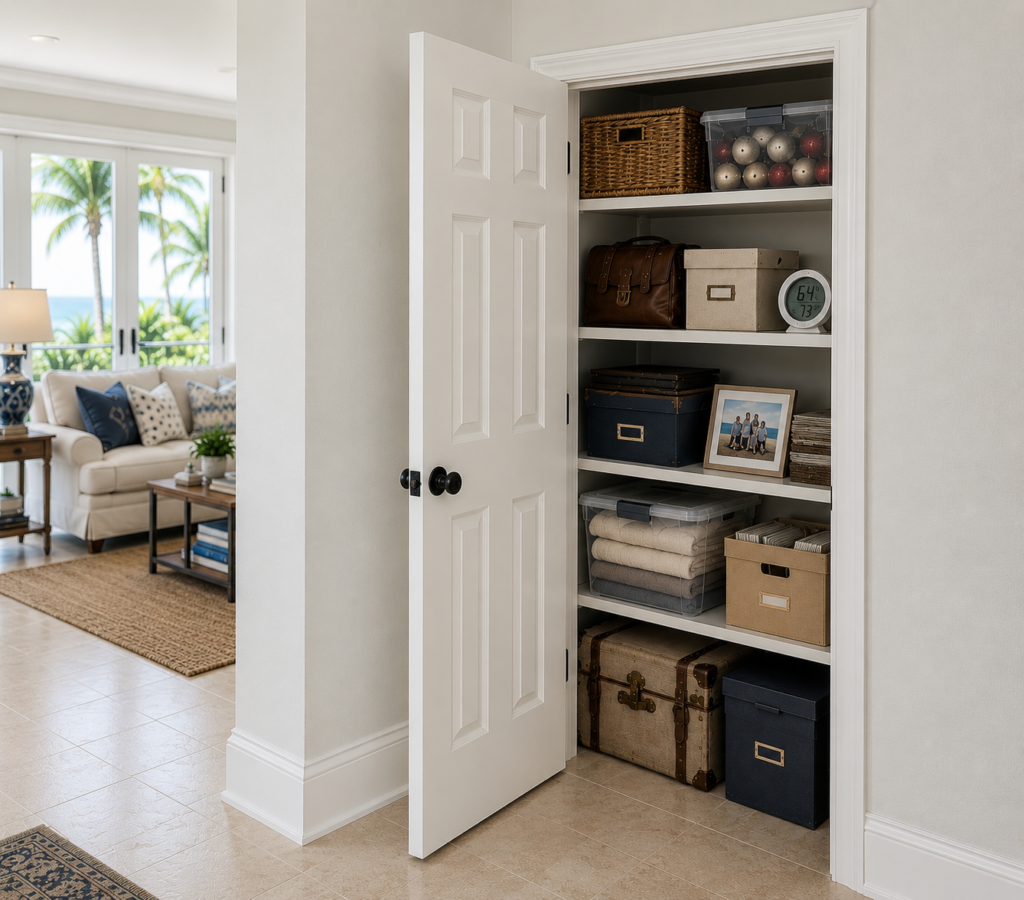
You put something away clean, dry, and in good condition. Months later, it feels different. A box feels soft. Fabric smells stale. Photos curl at the edges. A keepsake feels slightly damp even though no water ever touched it. In humid homes, stored belongings can change quietly over time, often before there is obvious mold, staining, or visible damage.
Humidity does not only affect the air. It affects the materials inside the home, especially belongings stored in closets, garages, attics, laundry rooms, spare bedrooms, and plastic bins. Many stored items are made from materials that absorb, hold, or react to moisture in different ways.
That is why storage problems in humid homes are not limited to musty smells. Humidity can affect texture, shape, odor, appearance, strength, and long-term condition. Understanding how this happens makes it easier to protect the items that matter before they start showing signs of moisture stress.
This article contains affiliate links. If you make a purchase through one of these links, The Humid House may earn a small commission at no additional cost to you.
Why Stored Belongings Are More Vulnerable in Humid Homes
Stored belongings are often more vulnerable than everyday household items because they sit still for long periods of time. They are not being moved, aired out, washed, worn, opened, or inspected regularly. That gives moisture more time to collect around them and more opportunity to affect the materials.
In a humid home, moisture is constantly moving between the air and surrounding materials. Some items absorb moisture directly from the air. Others trap moisture in folds, boxes, drawers, bins, or packaging. Even when an item never gets wet, it can still spend months exposed to damp air.
This matters because many stored belongings are made from porous or moisture-sensitive materials. Paper, cardboard, fabric, leather, wood, foam, and some adhesives can all respond to humidity. They may soften, swell, curl, weaken, smell stale, or age faster than they would in a drier environment.
Storage locations also matter. Closets, garages, attics, safes, and cases often have less airflow than open living spaces. A room may feel comfortable, but a sealed bin, packed closet, or garage shelf can behave differently. Moisture problems often begin in these quieter areas first.
What Humidity Actually Does to Stored Items
Humidity affects stored belongings through moisture exchange. When the surrounding air contains a lot of water vapor, porous materials can absorb some of that moisture. When the air dries out, some of that moisture may leave again. Over time, that repeated absorbing and releasing can change the way materials look, feel, and hold up.
Some changes are obvious. Cardboard may sag. Paper may ripple. Metal may rust. Fabric may smell stale. Other changes are more subtle. A keepsake may feel less crisp. A stored decoration may feel slightly tacky. A book may no longer close flat. A fabric item may feel clean but still smell off.
Humidity can also slow drying. If an item was stored with even a small amount of residual moisture, humid air makes it harder for that moisture to leave. This is why something can be put away “basically dry” and still come out smelling stale later.
The problem is not always one dramatic event. In many homes, it is repeated exposure: humid air, poor airflow, warm storage spaces, packed containers, and materials that quietly hold moisture longer than homeowners realize.
The Science Behind Why Materials Change
Different materials respond to humidity based on how they interact with water vapor.
Some materials are hygroscopic, meaning they can absorb moisture from the surrounding air. Paper, cardboard, wood, cotton, linen, leather, and many natural fibers fall into this category. They do not need liquid water to be affected. Damp air alone can be enough to change their moisture content.
When these materials absorb moisture, they can swell, soften, stretch, curl, or lose stiffness. When they dry again, they may shrink or stiffen. Repeated cycles can create warping, rippling, cracking, or weakening over time.
Warmth makes the problem more noticeable because warm air can hold more moisture than cooler air. In hot, humid garages or attics, stored belongings may be exposed to both elevated humidity and heat. That combination can speed up odor development, adhesive breakdown, paper aging, fabric changes, and corrosion.
Professional Perspective
From a building science perspective, stored belongings are part of the home’s moisture system. Materials do not sit separately from indoor humidity. They absorb, release, and respond to moisture depending on temperature, airflow, exposure time, and material type. This is why two homes with the same humidity reading can have very different storage problems.
Why Stored Items Can Feel Damp Even When They Were Never Wet
One of the most confusing storage problems is when items feel damp even though there was no leak, spill, or flooding.
This usually happens because the item has absorbed moisture from humid air or because moisture became trapped in the storage space. Fabric, paper, cardboard, and foam are especially prone to this. They can feel cool, limp, heavy, or slightly damp without ever being directly wet.
Plastic bins can also contribute to this feeling. Homeowners often assume sealed bins are always protective, but if moisture is already inside the bin when it is closed, the container can trap that moisture with the items. Temperature changes can also create condensation inside certain storage setups, especially in garages or spaces that heat and cool throughout the day.
The result is frustrating: the bin looks dry, the shelf looks dry, but the contents feel different. That does not always mean there is a major problem, but it does mean the storage environment is holding more moisture than the items can comfortably tolerate.
Why Stored Items Develop Odors in Humid Homes
Musty or stale odors are one of the first signs that stored belongings have been sitting in moisture-friendly conditions.
Odor does not always mean visible mold. Sometimes it comes from materials holding moisture long enough for organic compounds, dust, skin cells, residues, or minor microbial activity to become noticeable. Fabric, cardboard, paper, and stored shoes are common examples.
Humidity can also keep odors from clearing. In a dry, well-ventilated space, smells often dissipate more easily. In a humid, closed storage area, odors can linger and concentrate. This is why items stored in closets, bins, drawers, or garages may smell stale even when they looked clean when they were put away.
The key distinction is that odor is a clue, not a full diagnosis. A musty smell should prompt homeowners to inspect the storage area, check for moisture patterns, and improve drying and airflow. It does not automatically mean everything is ruined.
How Different Stored Materials Respond to Humidity
Not all stored belongings react the same way. The material matters.
| Stored Item Type | What Humidity Can Do Over Time |
|---|---|
| Cardboard boxes | Soften, sag, collapse, absorb odors, attract pests |
| Paper and documents | Ripple, curl, yellow, stick together, weaken |
| Books | Warp, smell stale, develop wavy pages, weaken bindings |
| Photos | Curl, stick, fade, develop surface changes |
| Fabric and clothing | Smell stale, feel damp, wrinkle, hold odors |
| Leather | Stiffen, soften, spot, crack, or develop mildew in poor conditions |
| Wood items | Swell, warp, crack, or shift shape |
| Metal items | Rust or corrode faster, especially in garages |
| Foam and cushions | Hold odors, lose shape, feel clammy |
| Decorations and keepsakes | Fade, soften, crack, smell stale, or deteriorate depending on material |
This is why a single storage bin can produce mixed results. One item may look fine, another may smell off, another may feel damp, and another may show visible deterioration. Humidity affects each material differently.
Why Garages and Attics Are Harder on Stored Belongings
Garages and attics often create some of the toughest storage conditions in humid climates.
These spaces may not be conditioned the same way as the rest of the home. They can experience higher temperatures, wider daily temperature swings, less airflow, and more exposure to outdoor humidity. Even when they are enclosed, they are often not moisture-controlled in the same way as living areas.
In garages, stored items may also sit near concrete, garage doors, exterior walls, vehicles, lawn equipment, and outdoor gear. These areas can introduce moisture, dirt, fumes, and temperature changes that make belongings age faster.
Attics can be even harder on certain items because heat builds up quickly. High heat combined with humidity can affect adhesives, plastics, photos, paper, candles, fabric, and keepsakes. Items that seem safe in a closet may not hold up the same way in an attic or garage.
This does not mean nothing can be stored there. It means homeowners should be more selective about what goes into those spaces and how it is protected.
Why Plastic Bins Do Not Always Solve the Problem
Plastic bins can be helpful, but they are not a perfect solution.
They protect belongings from dust, pests, and some outside exposure. They can also keep items organized and reduce direct contact with damp surfaces. But plastic bins can also trap moisture if items are stored before they are fully dry or if the bin is closed in a humid environment.
A sealed container does not remove moisture. It only contains the conditions that are already inside.
This is especially important for fabrics, paper, books, photos, decorations, and keepsakes. If those items already contain moisture, sealing them inside plastic may slow drying instead of improving it.
For many humid homes, the best storage strategy is not simply “use plastic bins.” It is:
- Store items fully dry
- Avoid packing bins too tightly
- Use breathable storage when appropriate
- Keep sensitive items out of garages and attics
- Check stored belongings periodically
- Control humidity in the storage area when possible
Plastic can help, but it cannot replace moisture control.
Signs Stored Belongings Are Being Affected by Humidity
Humidity-related storage problems are often gradual. Homeowners may not notice them until they pull items out months later.
Common signs include:
- Items feel damp, limp, or heavy
- Cardboard feels soft or weak
- Paper looks wavy or curled
- Books smell stale or no longer close flat
- Clothing smells off after storage
- Photos stick together or curl
- Metal items show rust or spotting
- Decorations look faded, sticky, brittle, or warped
- Leather feels stiff, tacky, or spotted
- Storage bins smell stale when opened
These signs do not all mean the same thing. Some are mostly odor or texture issues. Others suggest true material deterioration. The goal is to notice patterns early so the storage setup can be adjusted before more serious damage occurs.
How to Protect Stored Belongings in Humid Homes
Protecting stored items starts with controlling moisture exposure, not just choosing a different box.
The first step is deciding where items should be stored.
Sensitive belongings should usually be kept in the most stable part of the home, not the garage, attic, or outdoor storage area. Photos, documents, books, sentimental keepsakes, leather goods, and delicate fabrics usually do better inside conditioned living space.
The second step is making sure items are completely dry before storage.
This matters more than most people realize. Towels, clothing, shoes, decorations, outdoor gear, and fabric items can hold moisture in seams, folds, padding, or hidden layers.
The third step is avoiding overly packed storage.
When items are packed tightly, air cannot move easily between them. That can make it harder for moisture to escape and easier for odors to linger.
The fourth step is checking storage areas periodically.
Humid homes reward regular observation. A quick seasonal check can catch soft cardboard, stale odors, condensation, or damp-feeling items before the problem spreads.
Choosing Storage Products for Humid Conditions
For belongings that are appropriate for sealed storage, a gasket-sealed container provides more protection from the surrounding environment than a basic snap-lid tote. IRIS USA 31-Qt Storage Bins with Gasket Lids are a practical option for clothing, documents, keepsakes, and other moisture-sensitive items. Items should always be completely dry before the container is sealed.
For moisture sensitive items stored inside a sealed container, a properly sized desiccant can provide an additional layer of protection. Dry & Dry Silica Gel Packets make it easy to see when the desiccant has absorbed moisture and needs to be replaced or reactivated. Desiccants should supplement proper storage conditions rather than compensate for damp belongings or an excessively humid space.
Where Not to Store Sensitive Items
Some items should not be stored in harsh humidity conditions if there is another option.
These include:
- Family photos
- Important documents
- Books and paper keepsakes
- Leather items
- Heirloom clothing
- Baby clothes you want to preserve
- Electronics
- Candles
- Fabric decorations
- Sentimental holiday items
- Artwork
- Anything with glue, foam, paper, fabric, leather, or delicate finishes
These items can often tolerate short-term storage, but long-term exposure to heat and humidity can change them in ways that are hard to reverse.
If space is limited, prioritize. Store the most sentimental, expensive, or moisture-sensitive items inside the conditioned part of the home.
When a Dehumidifier Helps Storage Problems
A dehumidifier can help when the storage area itself remains humid for long periods.
If you are unsure how humid the actual storage area becomes, a standalone hygrometer like the ThermoPRO TP50 can help.
This is most useful in closets, storage rooms, laundry rooms, enclosed bedrooms, and other areas where humidity stays elevated despite normal air conditioning. A portable dehumidifier may help a specific problem area if the issue is localized.
Garages are more complicated. A portable dehumidifier may not work well in a garage that is frequently opened, poorly sealed, or exposed to constant outdoor humidity. In those cases, the better solution may be changing what gets stored there, improving storage methods, or moving sensitive items indoors.
A dehumidifier is not a cure for every storage issue. It is most useful when moisture levels are consistently high and the space is enclosed enough for the unit to make a difference.
What Homeowners Often Get Wrong About Stored Items
The biggest mistake is assuming that “dry when stored” means “safe forever.”
In a humid home, storage is not passive. The surrounding air keeps interacting with belongings over time. A clean, dry item can still absorb moisture later if the storage environment stays humid enough.
The second mistake is assuming a plastic bin automatically protects everything inside. Plastic can protect from some problems while worsening others if moisture is trapped.
The third mistake is using the garage or attic as default storage for everything. These spaces are convenient, but they are often some of the hardest environments for moisture-sensitive belongings.
The fourth mistake is waiting until there is obvious mold or visible damage. By then, items may already have absorbed odors, changed texture, weakened, or aged faster than expected.
Frequently Asked Questions
Why do things in storage feel damp even when they never got wet?
Stored items can absorb moisture from humid air, especially if they are made from fabric, paper, cardboard, foam, or other porous materials. They may feel damp even without a leak or spill because the surrounding air has enough moisture to affect the material over time.
Do plastic storage bins prevent humidity damage?
Plastic bins can help protect items from dust, pests, and some outside exposure, but they do not remove moisture. If items are stored with moisture already present, or if humid air is trapped inside the bin, plastic can slow drying and contribute to stale odors or damp-feeling contents.
Why do stored clothes smell stale in humid homes?
Stored clothes can absorb moisture and hold odors, especially when packed tightly or stored in closets, bins, garages, or laundry areas with limited airflow. The clothes may be clean, but humid storage conditions can still make them smell stale over time.
Are garages bad places to store belongings in humid climates?
Garages can be hard on stored belongings because they often experience higher humidity, heat, temperature swings, and less moisture control than living spaces. Some items are fine in garages, but paper, photos, fabrics, leather, electronics, and sentimental keepsakes usually need more stable conditions.
Can humidity damage photos and books?
Yes, humidity can affect photos, books, and paper products. Pages can ripple, curl, weaken, smell stale, or stick together. Photos may curl, fade, or develop surface changes depending on storage conditions and materials.
What should I avoid storing in a humid garage?
Avoid storing sensitive or sentimental items in a humid garage when possible. This includes photos, documents, books, heirloom clothing, leather, electronics, artwork, candles, and keepsakes made from paper, fabric, glue, foam, or delicate finishes.
The Bottom Line
Humidity can change stored belongings long before anything looks obviously ruined. Items may smell stale, feel damp, soften, curl, warp, corrode, or age faster simply because they have spent months sitting in moisture-heavy air.
The most important step is understanding that storage conditions matter. A garage, attic, closet, plastic bin, or packed shelf can behave differently from the rest of the home. Belongings that seem safely tucked away may still be interacting with humidity every day.
Protecting stored items in humid homes usually comes down to three things: keep sensitive belongings in stable areas, make sure items are truly dry before storing them, and avoid trapping moisture where it cannot escape. When homeowners understand how humidity affects different materials, storage becomes less about guessing and more about preventing slow, avoidable changes over time.