
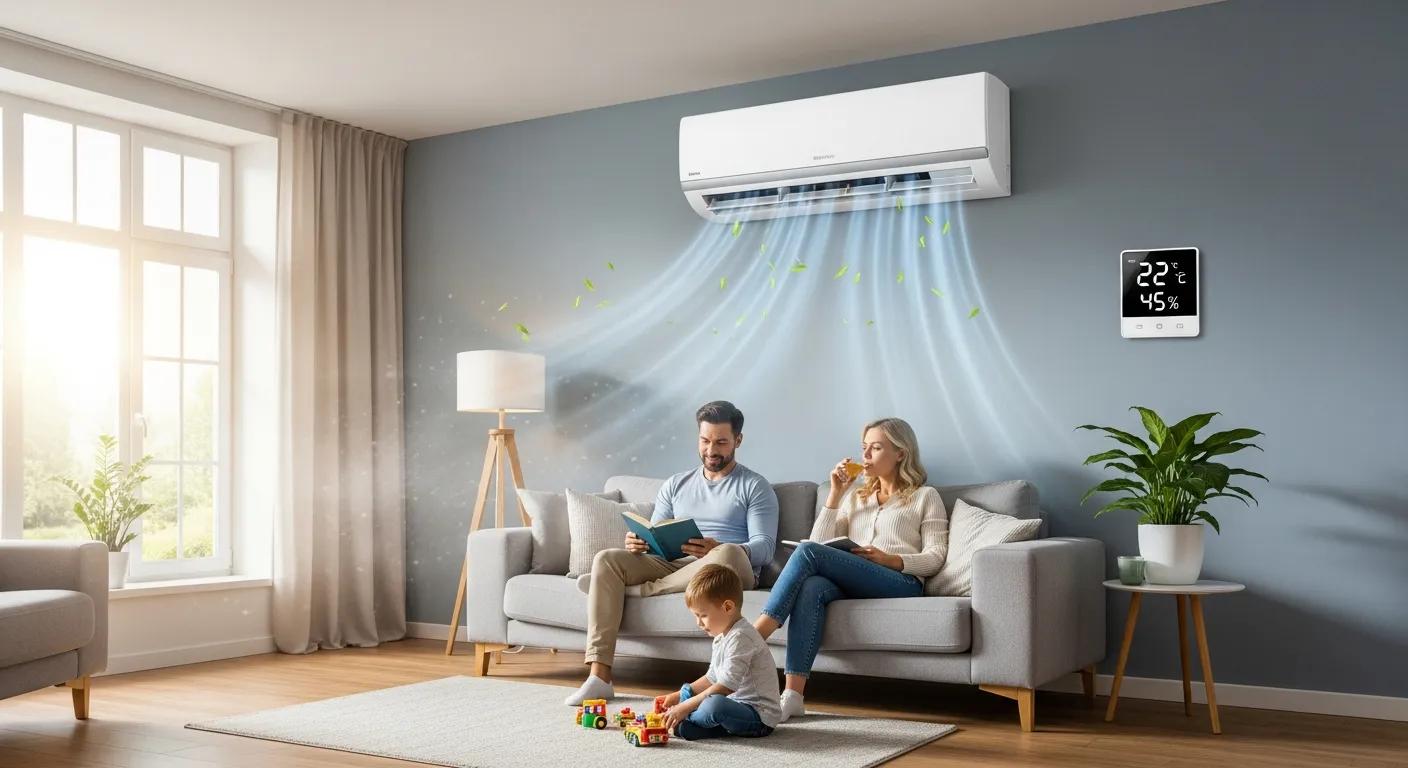
Air conditioners keep indoor spaces comfortable in humid climates, but many homeowners notice a common pattern: the system seems to fight harder at night. That’s not just perception — changes in outdoor temperature, shifts in relative humidity, and how your HVAC operates all play a role. Below we break down the mechanics of cooling and dehumidification, the typical causes of nighttime struggles, the energy and health consequences, and practical fixes you can use to improve comfort and efficiency.
Why Does High Humidity Make ACs Work Harder at Night?
Humidity changes how an air conditioner performs, especially after sunset. When relative humidity goes up, the AC has to remove more latent heat — the energy tied up in moisture — which makes effective cooling and dehumidification harder to achieve. That explains why a room can feel cool but still “sticky” when humidity is high.
How Does Humidity Affect Cooling and Dehumidification?
Humidity raises the latent heat load the system must remove. Sensible heat is the warmth you feel; latent heat is the energy tied to moisture. When there’s more moisture in the air, the evaporator coils need to condense and remove that water — a process that takes runtime. If the system can’t run long enough or the coils are restricted, dehumidification suffers and indoor air feels clammy.
Why Does Indoor Humidity Often Rise at Night in Humid Climates?
A few things combine to raise indoor humidity after dark. Cooler outdoor air holds less moisture before reaching saturation, so relative humidity commonly increases overnight. If your home has internal moisture sources (showers, cooking, even people breathing) or limited ventilation, that moisture accumulates. Without steady, effective dehumidification, indoor relative humidity climbs even as temperatures fall.
Research also points to lower sensible cooling loads and the effects of mechanical ventilation as key contributors to elevated indoor humidity — issues that affect comfort, health, and building durability.
Humidity Control in Humid Climates: AC Performance, Health & Solutions Field measurements and simulations show that well-built homes in humid regions can still experience high indoor humidity for long stretches of the year. When sensible cooling demand is low, the cooling system removes less moisture, allowing humidity to remain elevated. Mechanical ventilation sized to meet standards (for example, ASHRAE 62.2-2013) can add outdoor moisture if not coordinated with dehumidification. Research recommends options such as supplemental whole-home dehumidification, tuning cooling system controls, and thoughtful ventilation design (ERVs, supply or exhaust strategies) to address these issues. Development of Smart Ventilation Control Algorithms for Humidity Control in High-Performance Homes in Humid US Climates, 2016
What Common Issues Cause ACs to Struggle on Humid Nights?
Knowing the usual suspects makes troubleshooting easier. Typical causes include oversized equipment that short cycles, dirty coils or clogged filters that reduce airflow, and low refrigerant that limits cooling and moisture removal.
How Does an Oversized AC and Short Cycling Reduce Dehumidification?
An oversized unit cools a space quickly but then shuts off — a pattern called short cycling. Short cycles don’t give the system enough runtime to condense and remove moisture from the air, so you get cooler temperatures with poor humidity control. That combination feels uncomfortable and wastes energy.
Why Do Dirty Evaporator Coils and Filters Hurt Efficiency?
Dust and grime on evaporator coils reduce heat transfer, and clogged filters restrict airflow. Both problems make the system work harder and run less effectively, lowering both sensible cooling and dehumidification. Regular cleaning and filter changes are simple, high-impact fixes.
How Does Poor Nighttime AC Performance Affect Energy Use and Comfort?
When an AC struggles to control humidity, it usually uses more energy and delivers less comfort. You might see higher utility bills and still feel uncomfortable, especially during sleep when sticky air is most noticeable.
How Does High Indoor Humidity Increase Energy Use?
High humidity forces the system to run longer or more often to try to reach comfort setpoints, which raises energy consumption. In many humid climates, that extra load during peak months can noticeably increase utility costs.
Why Does Poor AC Performance Make Air Feel ‘Sticky’?
High humidity interferes with your body’s ability to cool itself through sweat evaporation. Even if the air is technically cooler, the presence of excess moisture prevents effective cooling at the skin, causing that sticky, uncomfortable sensation that also disrupts sleep.
What Health and Structural Risks Come from Nighttime Humidity Problems?
Beyond comfort and energy, sustained high indoor humidity can harm health and the building itself. It’s important to recognize these risks and take steps to control moisture.
How Does Excess Humidity Encourage Mold, Mildew, and Allergens?
Moist environments are breeding grounds for mold and mildew, which release spores and other allergens. These can trigger respiratory symptoms, allergies, or worsen asthma — especially in sensitive populations. Keeping relative humidity in a healthy range reduces these risks.
How Can High Humidity Damage Home Structure and Furnishings?
Chronic moisture can warp wood, degrade drywall, corrode metal, and encourage rot — all of which threaten structural integrity and increase repair costs. Controlling indoor humidity helps protect finishes, furniture, and the home’s long-term value.
What Solutions Improve Nighttime AC Performance and Humidity Control?
There are practical, proven ways to reduce nighttime humidity and improve comfort. From correct system sizing and routine maintenance to supplemental dehumidification and smarter controls, the right combination depends on your home and climate.
How Do Proper AC Sizing and Regular Maintenance Help?
An appropriately sized system runs at efficient cycle lengths that remove both heat and moisture. Routine maintenance — cleaning coils, changing filters, and inspecting refrigerant levels — keeps the system operating as designed and preserves its dehumidification capacity.
What Are the Benefits of Whole-Home Dehumidifiers and Variable-Speed ACs?
Whole-home dehumidifiers remove excess moisture independently of cooling, keeping humidity in check even when sensible cooling demand is low. Variable-speed compressors and fans adjust output slowly and run longer cycles, which improves moisture removal and increases comfort while often saving energy.
How Can Smart Thermostats and Home Upgrades Reduce Nighttime Humidity?
Smart controls and building improvements make a big difference. They let the HVAC system run in ways that prioritize humidity control when needed and prevent outside moisture from entering unexpectedly.
How Do Thermostat Settings Affect Dehumidification?
Small changes to night settings can help. Raising the set point a degree or two overnight lets the system run longer cycles, which improves dehumidification. Smart thermostats can also use humidity sensors to optimize runtime and balance temperature and moisture control automatically.
What Role Do Sealing, Insulation, and Ventilation Play?
Good air sealing and insulation reduce unwanted moisture infiltration and stabilize indoor temperatures. Balanced ventilation (for example, an ERV) can refresh indoor air while limiting moisture gain. Together, these measures reduce the burden on your AC and lower the risk of humidity-related problems.
Frequently Asked Questions
How can I tell if my air conditioner is struggling with humidity control?
Look for persistent dampness, a musty smell, condensation on windows, or that “sticky” feeling at night. If your home cools quickly but still feels humid, or your energy bills are higher than expected, those are signs your system isn’t dehumidifying effectively.
How do I know if my AC is oversized for my home?
Signs of an oversized unit include rapid cooling followed by frequent on/off cycles (short cycling), uneven temperatures between rooms, and continued humidity problems despite active cooling. An HVAC contractor can perform a load calculation to confirm proper sizing.
What maintenance steps should I take to improve AC performance?
Replace or clean air filters every 1–3 months, keep the outdoor unit free of debris, and have coils inspected and cleaned as needed. Schedule annual professional tune-ups to check refrigerant levels, airflow, and overall system health.
Are there better times of day to run my air conditioner for humidity control?
Running the AC consistently during hot, humid periods helps. Late afternoon and evening often coincide with higher moisture levels outside, so maintaining steady operation then — and running slightly longer cycles at night — can improve dehumidification.
What advantages does a whole-home dehumidifier offer?
A whole-home dehumidifier controls moisture independently of cooling demand, improving comfort and indoor air quality. It reduces mold risk, protects building materials and furnishings, and can lower HVAC energy use by easing the load on the cooling system.
How can I improve ventilation to reduce humidity?
Use exhaust fans in bathrooms and kitchens to expel moist air, and consider installing a balanced ventilation system like an ERV to exchange indoor and outdoor air with minimal energy loss. Proper sealing and insulation complement ventilation by limiting uncontrolled moisture entry.
The Bottom Line
Nighttime humidity issues are common in humid climates, but they’re manageable. Correct sizing, regular maintenance, smarter controls, and targeted dehumidification are the most effective ways to restore comfort, reduce energy use, and protect your home. To learn more about moisture and humidity and how it affects your home, check out our guides page for more information.