
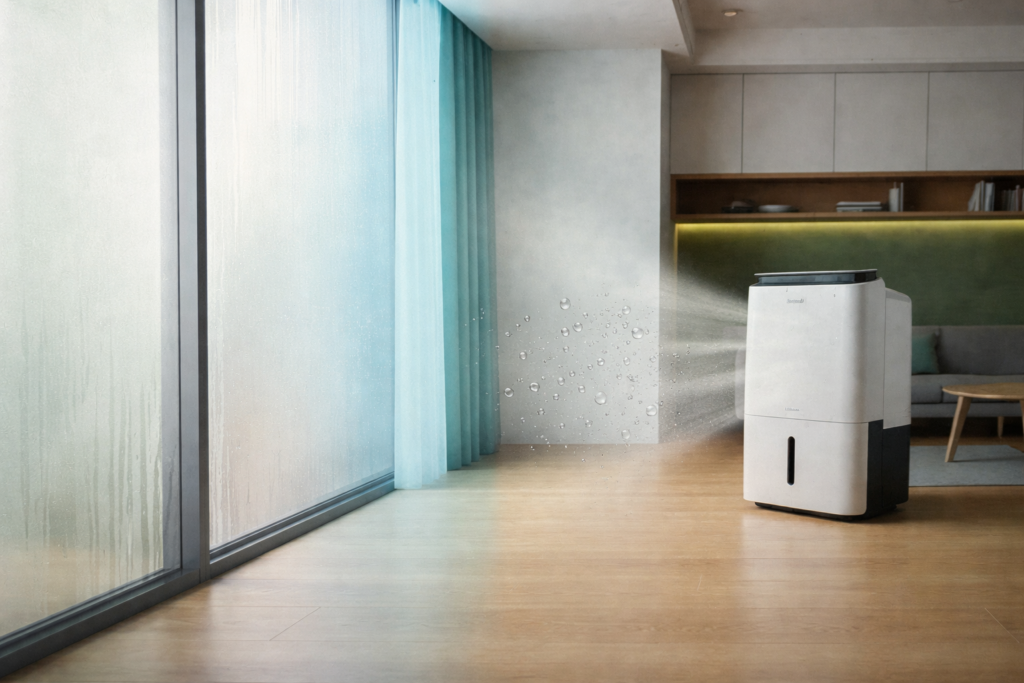
Understanding why your home feels humid can help you make effective changes to improve indoor air quality and comfort. We will look at the common causes of high humidity, AC-related issues, thermostat settings, DIY solutions, when to call a professional, and advanced options for ongoing moisture problems.
What Causes High Indoor Humidity When the AC Is On?
High indoor humidity can occur even when your AC is functioning due to several factors. The primary reason is that air conditioners are designed to remove moisture from the air, but if they are not functioning optimally, they may fail to do so effectively. Additionally, external factors such as weather conditions, home insulation, and indoor moisture sources can contribute to indoor humidity levels. Understanding these causes is essential for addressing the problem effectively.
How Does an Air Conditioner Remove Moisture from Indoor Air?
An air conditioner removes moisture from indoor air through a process called condensation. As warm, humid air passes over the cold evaporator coils, the temperature drops, causing moisture to condense into water droplets. This water is then collected and drained away, effectively reducing humidity levels. The efficiency of this process depends on the AC unit’s size, maintenance, indoor humidity levels, and the ambient humidity levels outside.
Why Does an Oversized AC Unit Lead to a Humid Home?
An oversized AC unit can lead to a humid home due to a phenomenon known as short cycling. When the AC is too large for the space, it cools the air too quickly without running long enough to effectively remove moisture. This results in a cycle where the air feels cool but remains humid, creating an uncomfortable environment. Proper sizing of the AC unit is crucial for effective humidity control.
How Do Common AC Problems Affect Moisture Removal?
Common AC problems can significantly hinder moisture removal, leading to increased indoor humidity. Issues such as dirty air filters, frozen evaporator coils, and low refrigerant levels can all impact the unit’s ability to dehumidify the air effectively.
What Impact Do Dirty Air Filters and Frozen Evaporator Coils Have on Humidity?
Dirty air filters restrict airflow, reducing the AC’s efficiency and its ability to remove moisture from the air. Similarly, frozen evaporator coils can occur when airflow is obstructed or refrigerant levels are low, leading to inadequate cooling and moisture removal. Regular maintenance, including changing filters and checking for ice buildup, is essential to ensure optimal performance.
How Do Low Refrigerant Levels and Leaky Ductwork Increase Indoor Dampness?
Low refrigerant levels can prevent the AC from cooling effectively, which in turn affects its moisture removal capabilities. Additionally, leaky ductwork can allow humid air from unconditioned spaces (such as attics or crawl spaces) to enter the home, exacerbating the dampness issue. Addressing these problems promptly can help maintain a comfortable indoor environment.
How Do Thermostat Settings Influence Indoor Humidity Levels?
Thermostat settings play a crucial role in managing indoor humidity levels. The way you configure your thermostat can either help or hinder moisture control in your home.
Why Does Setting the Fan to ‘ON’ Cause a Sticky Feeling?
When the thermostat fan is set to ‘ON’, the fan runs continuously, circulating air even when the AC is not cooling. This can lead to a sticky feeling as the air does not get dehumidified during these periods because moisture is re-evaporated into the air from the evaporator coil. Setting the fan to ‘AUTO’ allows it to run only when the AC is cooling, which helps maintain lower humidity levels.
What Is the Ideal Thermostat Fan Setting for Moisture Control?
For optimal moisture control, it is recommended to set the thermostat fan to ‘AUTO’. This setting ensures that the fan operates only when the AC is actively cooling, allowing for better moisture removal and a more comfortable indoor environment.
What DIY Solutions Can Help Reduce Humidity with AC Running?
There are several DIY solutions that homeowners can implement to help reduce humidity levels while the AC is running. These solutions focus on maintenance and minor adjustments that can significantly improve indoor air quality.
How to Maintain Air Filters and Adjust Thermostat Settings Effectively?
Regular maintenance of air filters is crucial for optimal AC performance. Homeowners should check and replace filters every 1-3 months, depending on usage and environmental factors. Additionally, adjusting the thermostat settings to ‘AUTO’ can enhance moisture control, as discussed earlier. These simple steps can lead to noticeable improvements in indoor humidity.
What Minor Air Leak Sealing Can You Perform to Prevent Moisture Infiltration?
Sealing minor air leaks around windows, doors, and ductwork can prevent humid air from entering your home. Using weatherstripping or caulk can effectively seal these leaks, reducing the overall humidity levels and improving energy efficiency.
When Should You Call an HVAC Professional for Humidity Issues?
While many humidity issues can be addressed through DIY solutions, there are times when professional intervention is necessary. Recognizing the signs that indicate the need for professional help is essential for maintaining a comfortable home environment.
Which Signs Indicate the Need for Refrigerant Recharge or Coil Cleaning?
Signs that may indicate the need for professional assistance include persistent humidity despite running the AC, ice buildup on the coils, reduced cooling performance, or unusual noises from the unit. These symptoms often suggest low refrigerant levels or dirty coils, both of which require professional assessment and service.
How Can Duct Sealing and AC Sizing Assessment Improve Moisture Control?
Professional duct sealing can prevent air leaks that contribute to humidity issues, while an AC sizing assessment ensures that your unit is appropriately sized for your home. Both services can significantly enhance moisture control and overall indoor air quality.
What Are Advanced Solutions for Persistent Dampness in Your Home?
For homeowners struggling with persistent dampness, advanced solutions may be necessary. These options can provide more comprehensive humidity control and improve overall indoor air quality.
How Do Whole-House Dehumidifiers Work with HVAC Systems?
Whole-house dehumidifiers work in conjunction with HVAC systems to remove excess moisture from the air. These systems are installed directly into the home’s ductwork and can effectively manage humidity levels throughout the entire house, providing a more comfortable living environment.
What Are the Benefits and Limitations of Portable Dehumidifiers?
Portable dehumidifiers offer a flexible solution for managing humidity in specific areas of the home. While they can be effective in smaller spaces, their capacity is limited compared to whole-house systems. Homeowners should consider their specific needs and the size of the area when choosing between these options.
Frequently Asked Questions
What are the health effects of high indoor humidity?
High indoor humidity can lead to various health issues, including respiratory problems, allergies, and mold growth. Excess moisture in the air can create an environment conducive to dust mites, mildew, and other allergens, which can trigger asthma and other respiratory conditions. Additionally, prolonged exposure to dampness can lead to structural damage in your home, further exacerbating health risks. Maintaining optimal humidity levels between 30% and 50% is essential for both comfort and health.
How can I measure indoor humidity levels accurately?
To measure indoor humidity levels accurately, you can use a hygrometer, a device specifically designed to measure humidity. Hygrometers come in various forms, including digital and analog models. Place the hygrometer in a central location in your home, away from direct sunlight or drafts, for the most accurate reading. Many modern smart home devices also include humidity sensors, allowing you to monitor levels conveniently through your smartphone or home automation system.
What role does ventilation play in controlling indoor humidity?
Ventilation is crucial for controlling indoor humidity as it helps to exchange stale, humid air with fresh, drier air from outside. Proper ventilation can significantly reduce moisture levels, especially in areas prone to dampness, such as kitchens and bathrooms. Installing exhaust fans, opening windows, and using air exchange systems can enhance airflow and improve indoor air quality. Ensuring that your home is well-ventilated can help maintain a comfortable and healthy living environment.
Can indoor plants affect humidity levels?
Yes, indoor plants can affect humidity levels in your home. While they can help to increase humidity through a process called transpiration, where moisture is released from their leaves, the overall impact depends on the number and type of plants. Some plants, like ferns and peace lilies, are particularly effective at raising humidity. However, excessive moisture from too many plants can lead to dampness and mold growth, so it’s essential to find a balance.
What are some signs of mold growth due to high humidity?
Signs of mold growth due to high humidity include visible mold spots on walls, ceilings, or furniture, a musty odor, and increased allergy symptoms among residents. Mold thrives in damp environments, and if you notice any of these signs, it’s crucial to address the humidity issue promptly. Regularly inspecting areas prone to moisture, such as bathrooms and basements, can help catch mold growth early and prevent further damage to your home and health.
How can I improve insulation to reduce indoor humidity?
Improving insulation can help reduce indoor humidity by preventing warm, moist air from entering your home. Start by sealing gaps and cracks around windows, doors, and ductwork with weatherstripping or caulk. Additionally, consider adding insulation to attics, walls, and basements to create a more effective barrier against humidity. Proper insulation not only helps control moisture levels but also enhances energy efficiency, leading to lower utility bills and a more comfortable living environment.
The Bottom Line
Addressing indoor humidity issues is essential for maintaining a comfortable and healthy living environment. By understanding the causes and implementing effective solutions, such as proper AC maintenance and DIY adjustments, you can significantly improve your home’s air quality. Don’t let dampness disrupt your comfort—take proactive steps today to enhance your indoor atmosphere. For more tips and solutions, explore our comprehensive guides on humidity control.