
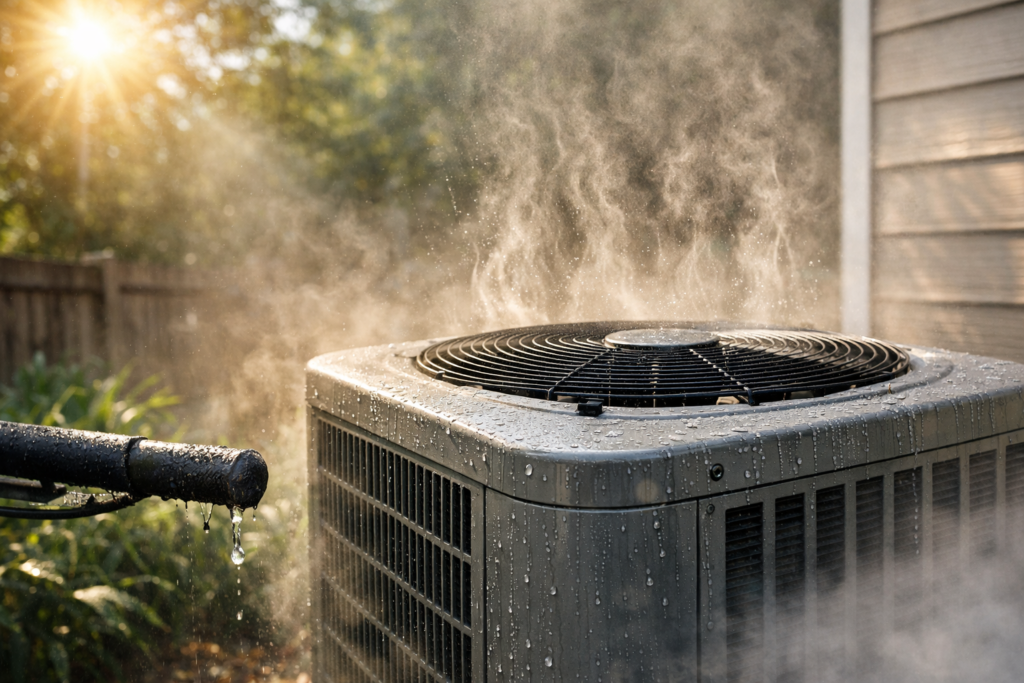
In hot, humid climates, air conditioners do far more than cool indoor air. They are constantly managing heat, moisture, and airflow at the same time — a workload that places significantly more strain on the system than homeowners often realize. Over time, this extra demand accelerates wear, reduces efficiency, and increases the likelihood of breakdowns.
This guide explains why heat and humidity stress air conditioners at a mechanical level, how that strain shows up in real homes, and what homeowners can do to reduce unnecessary system fatigue before failures occur.
How Heat Increases Mechanical Stress on Air Conditioners
Air conditioners move heat out of your home. The hotter it is outside, the harder that job becomes.
Why High Outdoor Temperatures Force Longer Run Times
As outdoor temperatures rise, the temperature difference between indoor air and outdoor air shrinks. That makes it harder for the system to release heat through the condenser coil. To compensate, the AC must:
- Run longer cycles
- Maintain higher refrigerant pressures
- Operate closer to its design limits
Longer runtimes increase wear on compressors, fan motors, and electrical components — especially during sustained heat waves when systems may run most of the day.
How Heat Raises Refrigerant Pressure and Compressor Load
High outdoor temperatures raise condenser pressures inside the system. Elevated pressure forces the compressor to work harder to circulate refrigerant. Over time, this leads to:
- Increased electrical draw
- Higher internal temperatures
- Faster breakdown of motor windings and lubricants
Compressors are engineered to handle this stress — but not continuously, season after season, without consequences.
Why Humidity Adds a Second, Hidden Workload
Cooling is only half the job in humid climates. The other half is moisture removal.
How Air Conditioners Remove Moisture — and Why It’s Demanding
As warm air passes over the evaporator coil, moisture condenses on the cold surface and drains away. That process requires:
- Adequate airflow
- Proper refrigerant temperatures
- Sufficient runtime
In humid climates, the volume of moisture that must be removed is far higher. The AC must stay running long enough to both cool and condense water vapor — increasing system load even when temperatures are only moderately hot.
Industry guidance consistently recognizes the added mechanical and energy burden that heat and humidity place on air-conditioning systems.
ASHRAE Handbook on HVAC fundamentals In humid climates, air-conditioning systems are required to remove both sensible heat (air temperature) and latent head (moisture content). As indoor humidity rises, a greater portion of system capacity is devoted to moisture removal rather than temperature reduction. This increases compressor runtime, reduces overall cooling efficiency, and elevates energy consumption. Prolonged operation under high latent loads places additional thermal and mechanical stress on system components, contributing to accelerated wear and reduced service life.
Why High Humidity Slows Cooling Efficiency
When indoor air is moisture-heavy, more of the system’s capacity is diverted toward dehumidification rather than temperature reduction. This can result in:
- Slower temperature drops
- Longer cycles
- Increased energy consumption
Homeowners often respond by lowering the thermostat, which further increases runtime and strain without addressing the underlying humidity problem.
How Heat and Humidity Compound System Stress
Heat and humidity together create a compounding effect that is more damaging than either condition alone.
Why Systems Run Longer Without Adequate Recovery Time
In hot, humid climates:
- The AC starts earlier in the day
- Runs longer into the evening
- Experiences fewer off-cycles for cooling and pressure equalization
This reduces recovery time for motors and electrical components, accelerating long-term wear.
How Moisture Contributes to Corrosion and Electrical Issues
Persistent humidity increases the risk of:
- Corrosion on electrical terminals
- Rust on metal components
- Moisture intrusion into control boards and motors
These issues may not cause immediate failure, but they steadily degrade reliability over time.
How Ongoing Strain Turns Normal Operation Into Failure
Extra strain from heat and humidity does not cause immediate breakdowns. Instead, it accelerates predictable failure pathways that show up years earlier in hot, humid climates.
Common long-term outcomes include:
- Compressor fatigue and early failure from sustained high pressure and temperature
- Electrical component degradation due to heat and moisture exposure
- Refrigerant and airflow problems that worsen as coils and motors lose efficiency
- Condensate and drainage issues caused by elevated moisture loads
These are the same issues that appear repeatedly in hot, humid regions — not because systems are defective, but because they operate under continuous environmental stress.
For a deeper look at these specific failures and why they occur more often in humid climates, see our full guide on why air conditioners fail in hot, humid climates.
Common Signs Heat and Humidity Are Overworking Your AC
Strain often shows up subtly before a breakdown occurs.
Performance-Related Warning Signs
- Longer cooling cycles
- Difficulty reaching set temperature
- Higher energy bills without usage changes
- Reduced airflow from vents
Mechanical and Electrical Red Flags
- Frequent system cycling
- Unusual noises during operation
- Tripped breakers during peak heat
- Ice buildup on evaporator coils
These symptoms often indicate the system is operating near its limits — not necessarily that it is defective.
Why Proper Sizing and Design Matter More in Humid Climates
System design mistakes are amplified by heat and humidity.
How Oversized Systems Increase Strain Instead of Reducing It
Oversized air conditioners cool air quickly but shut off before removing sufficient moisture. This leads to:
- Persistently high indoor humidity
- Short cycling
- Increased electrical wear
In humid climates, longer, steadier runtimes at lower capacity are often healthier for the system.
Why Variable-Speed Systems Handle Humidity Better
Variable-speed systems adjust output based on demand, allowing:
- Longer dehumidification cycles
- Lower operating pressures
- Reduced mechanical stress
These systems are not immune to failure, but they typically manage humid conditions more gracefully.
How Homeowners Can Reduce Heat and Humidity Strain
Reducing strain does not always require major upgrades.
Practical Steps That Lower System Load
- Keep indoor humidity in the 30–50% range
- Use exhaust fans to remove moisture at the source
- Avoid extreme thermostat setbacks
- Maintain clean filters and coils
Environmental Improvements That Matter
- Seal duct leaks to reduce latent load
- Improve attic insulation to limit heat gain
- Shade outdoor condenser units without restricting airflow
Each small improvement reduces how hard the system must work during peak conditions.
When Added Humidity Control Makes Sense
In some homes, the AC alone cannot manage moisture effectively.
Situations Where Dehumidification Helps
- Homes with high infiltration
- Coastal or tropical climates
- Homes with frequent condensation or musty odors
- Systems that run long but still feel uncomfortable
Whole-home or targeted dehumidifiers reduce moisture load so the AC can focus on temperature control.
Quick Reference: How Heat and Humidity Stress AC Systems
| Factor | Effect on System | Long-Term Impact |
| High outdoor heat | Raises pressures and runtime | Compressor wear |
| High indoor humidity | Increases latent load | Longer cycles |
| Limited recovery time | Continuous operation | Electrical fatigue |
| Moisture exposure | Corrosion risk | Reliability loss |
Frequently Asked Questions
Is it normal for my AC to run all day in hot, humid weather?
Longer runtimes are common during extreme conditions, but nonstop operation can indicate excessive heat gain, humidity load, or system sizing issues.
Does lowering the thermostat help remove humidity faster?
Not necessarily. Lower setpoints can increase runtime without improving moisture removal if airflow or system design is limiting dehumidification.
Why does my house feel clammy even when it’s cool?
This usually means humidity removal is lagging behind cooling — often due to short cycling, airflow issues, or excessive moisture entering the home.
Can maintenance reduce strain from heat and humidity?
Yes. Clean coils, proper refrigerant levels, and unobstructed airflow all help systems manage heavy environmental loads more efficiently.
When should I consider a system upgrade for humidity control?
If comfort issues persist despite good maintenance and humidity management, a variable-speed system or supplemental dehumidification may be appropriate.
The Bottom Line
Heat and humidity place continuous, compounding stress on air conditioners in hot climates. High temperatures increase mechanical load, while humidity adds a hidden moisture-removal burden that extends runtimes and accelerates wear. Over time, this strain shortens equipment life — especially in systems that are poorly sized, inadequately maintained, or operating in homes with high moisture infiltration.
By understanding how these forces interact and taking practical steps to reduce load, homeowners can improve comfort, lower energy use, and significantly reduce the risk of premature AC failure.