
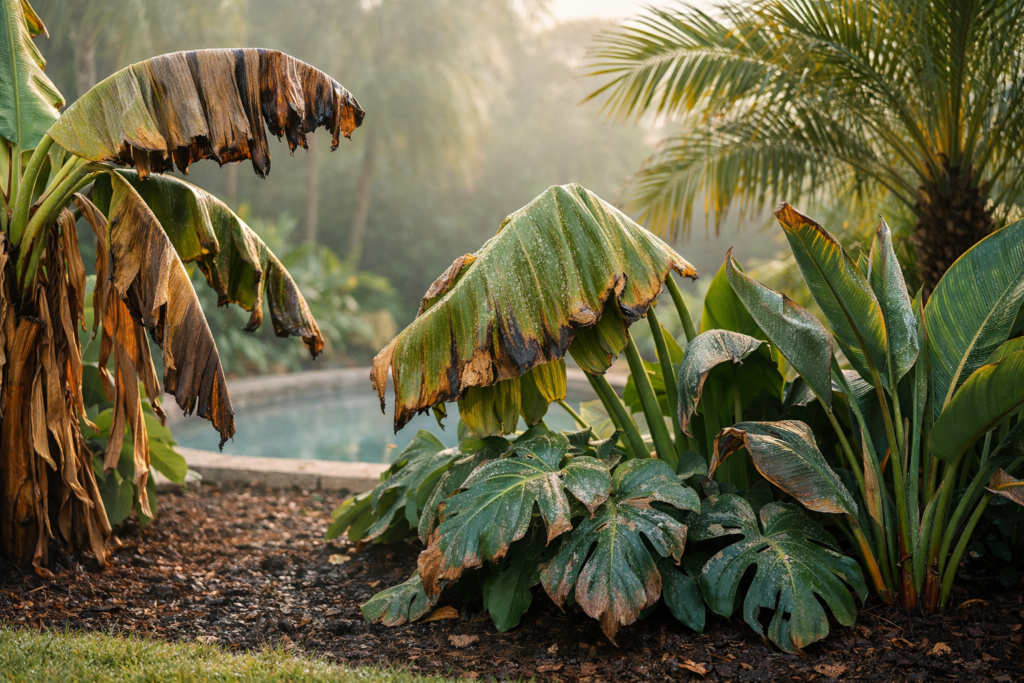
Freeze damage is a familiar sight in warm regions after a sudden cold snap. Leaves collapse, stems soften, and entire plants can appear lifeless within hours. It often feels like something permanent has happened.
But what’s visible on the surface doesn’t always reflect what’s happening inside the plant.
Cold exposure affects moisture movement within plant tissue before it determines survival. The way water shifts, freezes, and redistributes inside cells shapes what we see in the days after temperatures rise. Some plants that look completely lost recover. Others that appear stable decline later.
Understanding what freeze injury actually does beneath the surface helps explain why plants respond so differently once the weather warms again.
What Happens Inside Plants During a Freeze?
Plants are mostly water.
When temperatures drop below freezing, that internal moisture begins to crystallize. As ice forms, it expands. This expansion can rupture cell walls and disrupt the plant’s internal transport system.
Even when freezing doesn’t destroy tissue outright, it pulls water away from living cells. Once temperatures rise, those cells may no longer retain moisture.
That’s why plants often appear wilted, collapsed, or waterlogged after a freeze. The visible damage is a structural response to changing moisture states—not simply exposure to cold air.
Why Freeze Damage Often Looks Worse Than It Is
Leaves and outer stems are the first parts of a plant to freeze because they are most exposed.
Once thawing begins, damaged cells lose rigidity and collapse. This can create:
- translucent leaves
- darkened foliage
- soft stems
However, deeper structures like roots, crowns, and interior stems are often protected by soil or bark layers.
In humid climates, moisture in the air slows the drying of damaged tissue. This can make plants appear worse for longer, even when internal structures remain viable.
How Humidity Influences Freeze Injury
Moist air behaves differently than dry air during and after a freeze.
Humidity can slightly buffer plants during brief cold events because moist air retains heat longer. But once temperatures rise, that same moisture slows evaporation from damaged tissue.
This leads to:
- prolonged softness
- delayed drying
- extended visual decline
In warm coastal regions, the pattern often looks like ongoing damage even when the injury has already stabilized internally.
How Freeze Damage Typically Appears Over Time
| Time After Freeze | What’s Happening Inside the Plant | What It May Look Like |
| Immediately after thaw | Cells lose structure as moisture redistributes | Leaves appear wilted or translucent |
| 24 – 72 hours | Ruptured tissue collapses | Darkening or soft stems |
| 1 – 2 weeks | Damaged areas begin drying | Browning or leaf drop |
| 2 – 4 weeks | Viable tissue stabilizes | New buds may form |
| 4 – 8 weeks | Recovery becomes clearer | Regrowth or continued decline |
Visible decline in early stages doesn’t always predict long-term survival.
Why Immediate Pruning Can Interfere With Recovery
After a freeze, removing damaged growth is a common instinct.
But outer foliage often shields inner stems from temperature swings and moisture loss. Removing it too soon exposes vulnerable tissue before the plant has reestablished internal balance.
Pruning also signals growth activity. If warmth is followed by another cold event, new growth may be more sensitive than the original tissue.
Why Some Plants Recover While Others Don’t
Recovery depends less on appearance and more on structural protection.
Woody plants tend to withstand freezing better because their growth points are insulated beneath bark layers. Herbaceous plants often show dramatic surface damage but may regrow from underground structures.
Duration of exposure also matters. Brief freezes affect surface tissue. Prolonged cold penetrates deeper into stems and roots.
Microclimates within a landscape—wind exposure, reflected heat, or soil moisture—can shape outcomes significantly.
Professional Insight
University Extension Horticulture Guidance on Freeze Injury in Plants — Ice generally forms first in the spaces between plant cells rather than inside them. As this happens, water inside the cells moves outward toward the forming ice crystals. This movement causes dehydration of the cells even if they are not physically ruptured.
If the cell membranes remain intact, the cells may reabsorb water after temperatures rise and survive the event. However, when dehydration and membrane damage are severe, the cells cannot regain normal structure and function.
In this way, injury results not simply from low temperature exposure, but from the redistribution of water during freezing and thawing, which determines whether plant tissue recovers or deteriorates following a freeze.
This mechanism helps explain why plants may appear intact immediately after a cold event but collapse in the weeks that follow. The outcome depends on whether cells are able to restore internal moisture balance once temperatures return to normal.
Signs That a Plant May Still Recover
Even severely damaged plants may remain viable if:
- inner stems remain firm
- crowns are intact
- roots were insulated by soil
- delayed budding occurs
Surface damage does not always reflect root health.
When Freeze Damage May Be More Serious
Persistent structural collapse can indicate deeper injury.
Stem splitting, crown rot, or prolonged softness may suggest that freezing reached internal transport pathways.
In humid regions, lingering moisture can sometimes contribute to secondary decline after the initial injury.
What You Can Do To Help Recovery
In humid environments, freeze injury isn’t just about cold damage. It’s about what happens after the freeze — when moisture lingers in compromised tissue and slows structural recovery.
Because of this, the goal is not to “revive” the plant quickly.
The goal is to stabilize tissue while preventing secondary moisture damage.
Here’s what actually helps.
Wait Before Cutting Back
It’s tempting to remove brown, crispy growth immediately.
But in humid climates, damaged tissue often acts as temporary protection.
Freeze-injured leaves and stems can:
- shield inner tissue from sun stress
- reduce additional moisture intrusion
- limit rapid transpiration swings
- Pruning too early exposes vulnerable interior tissue to humidity, increasing the risk of:
- rot
- fungal colonization
- structural collapse
Wait until new growth begins or until stems are clearly soft or decayed before trimming.
Improve Airflow Around the Plant
Humidity slows drying inside plant tissue.
After a freeze, cellular membranes are already compromised.
If moisture remains trapped, recovery becomes harder.
Increasing airflow helps:
- reduce surface wetness
- limit microbial colonization
- support gradual drying of damaged areas
Simple actions that help:
- thin surrounding dense growth
- remove heavy mulch piled against stems
- avoid crowding with temporary covers
This allows damaged tissue to stabilize instead of staying persistently damp.
Hold Off On Heavy Watering
Freeze-injured roots often absorb water poorly.
In humid climates, soil may already retain moisture — even if the plant appears dry above ground.
Overwatering can:
- suffocate recovering roots
- encourage rot
- delay regrowth signals
Instead:
Allow soil to partially dry between watering cycles.
Plants recovering from freeze damage need oxygen access at the root level more than excess moisture.
Avoid Fertilizing Too Soon
Fertilizer encourages rapid growth — but freeze-damaged plants are not structurally ready for it.
Pushing new growth before membranes recover can lead to:
- weak shoots
- collapse of emerging tissue
- additional stress on roots
Wait until:
- consistent warm weather returns
- visible new growth begins
Only then should light feeding be considered.
Protect From Additional Moisture Stress
In humid climates, secondary damage often comes from lingering wetness rather than the freeze itself.
If heavy rains follow a freeze event, consider:
- temporarily improving drainage
- avoiding overhead irrigation
- gently clearing debris that traps moisture against stems
The objective is to prevent damaged tissue from remaining wet for prolonged periods.
Monitor Stem Integrity
Crispy leaves don’t always mean total loss.
Recovery depends on whether:
- stems remain firm
- inner tissue stays structurally intact
Check by lightly scratching bark:
Green beneath = potential recovery
Brown and soft = structural failure
This helps guide pruning decisions later.
Support Gradual Recovery
Freeze-damaged plants in humid climates often rebound slowly.
Sudden interventions tend to create more stress than stability.
Helpful conditions include:
- consistent warmth
- moderate soil moisture
- steady airflow
Given time, many tropical plants redirect energy toward new growth once internal moisture balance stabilizes.
Frequently Asked Questions
Do brown or black leaves mean the plant is dead?
No.
Leaf tissue freezes quickly because of its high moisture content and exposure. Even when leaves are fully damaged, roots and protected growth points may remain intact.
Why do plants look mushy after freezing?
Ice expansion disrupts cell walls.
When thawing occurs, those cells cannot retain water, creating a soft or waterlogged texture.
How long does it take to know if a plant will recover?
Several weeks is typical.
Recovery depends on internal moisture balance and tissue integrity, not initial appearance.
Does humidity make freeze damage worse?
Humidity influences how damage appears.
Moist air slows drying, which can extend the visible effects of freeze injury even after internal stabilization.
Should I fertilize to help recovery?
Heavy fertilization immediately after a freeze can stimulate premature growth before the plant has reestablished internal balance.
Allowing stabilization first supports stronger regrowth.
The Bottom Line
Freeze damage reflects how moisture inside plant tissue responds to sudden temperature shifts. In humid climates, visual decline may last longer because moisture slows drying and recovery.
Outcomes depend on structural integrity, exposure duration, and environmental conditions—not just early appearance.
Time often reveals more than initial damage.