
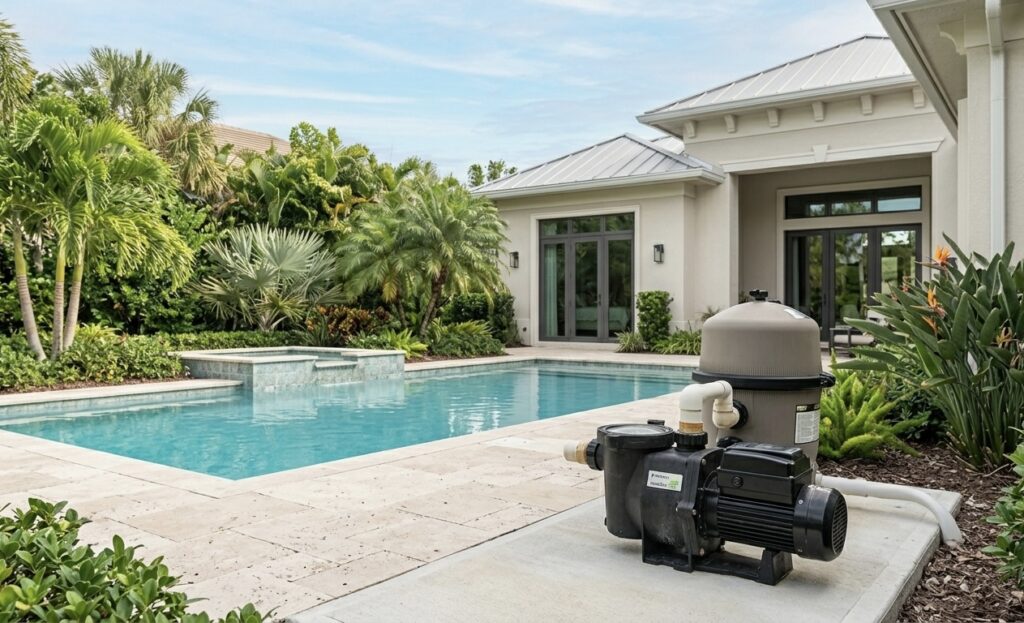
Pool pumps keep water moving, filtration working, and pool chemistry stable. In hot, humid climates, that constant operation happens under added environmental stress, where heat and moisture gradually wear on seals, motors, and internal components. Over time, those conditions can shorten how long a pump lasts compared to milder regions, even when everything appears to be working normally.
This article contains affiliate links. If you make a purchase through one of these links, The Humid House may earn a small commission at no additional cost to you.
What Is the Average Lifespan of Pool Pumps in Hot, Humid Climates?
In hot, humid regions most pool pumps last roughly 8 to 15 years. That range depends on the pump type, how well it’s maintained, and the local environment — so proper care can make a big difference.
How Does Hot, Humid Climate Affect Pool Pump Longevity?
Heat speeds motor wear and can trigger thermal shutdowns, while humidity raises the risk of corrosion in electrical parts and metal fittings. Together these stressors accelerate component failure — which is why regular checks and preventive steps are essential where moisture and heat are constant.
What Are the Lifespan Differences Between Variable Speed and Single Speed Pumps?
Variable-speed pumps usually outlast single-speed models. They run at lower RPMs for much of the day, which reduces wear and generates less heat. That energy efficiency also lowers operating temperatures and stress on the motor. Single-speed pumps run at full throttle more often, so their parts often wear out sooner.
What Key Factors Shorten Pool Pump Life in Hot, Humid Weather?
Several common problems speed up pump degradation in hot, humid conditions. Identifying these lets you focus maintenance where it matters most.
The scientific understanding of corrosion in hot and humid environments provides a crucial foundation for addressing these challenges.
Corrosion Mechanisms in Hot, Humid, Saline Environments Components used in high-temperature, high-humidity and saline marine settings face accelerated corrosion. Studies of metal matrix composites (MMCs) used in offshore equipment analyze how heat, humidity and salinity drive corrosion behavior and summarize the underlying mechanisms. Recent progress on corrosion mechanisms of graphene-reinforced metal matrix composites, 2023
- Extreme Heat: High temperatures increase motor stress and raise the risk of overheating and early failure.
- High Humidity: Persistent moisture promotes corrosion of electrical connections and metal parts, undermining reliability.
- Poor Maintenance Practices: Skipping routine cleaning, inspections, and upkeep lets problems compound and shortens service life.
How Does Extreme Heat Cause Pool Pump Overheating?
High ambient temperatures reduce a motor’s ability to shed heat. That can cause repeat thermal cutouts, insulation breakdown, or permanent damage to windings. Keep the pump shaded, well-ventilated, and free of obstructions to lower operating temperature.
In What Ways Does High Humidity Impact Pool Pump Components?
Humidity allows moisture into electrical housings and around metal parts, which fosters corrosion, loosening contacts, and electrical shorts. Regular inspections and moisture-control measures help catch early corrosion before it leads to failure.
Indeed, research specifically highlights how humidity can accelerate material degradation and corrosion in pool environments.
Humidity-Induced Corrosion in Pool Environments Studies show that humidity accelerates material degradation and increases corrosion rates in enclosed and semi-enclosed environments, underlining the need for moisture-aware maintenance strategies. Climatically accelerated material processes determining the long-term reliability of light-emitting diodes, G Harsanyi, 2024
How Can You Extend Your Pool Pump’s Life in Tropical and Humid Climates?
- Regular Maintenance Practices: Follow a consistent maintenance schedule — clean baskets and filters, check seals, and address leaks promptly.
- Installation Tips: Install the pump in a well-ventilated, shaded location with solid mounting and tight electrical connections.
- Use of Pool Covers: A good cover cuts debris and evaporation, reducing strain on filtration and the pump.
What Maintenance Practices Are Essential for Pool Pumps in Hot Weather?
- Regular Cleaning: Remove debris from the skimmer, pump basket and filter to keep flow steady and reduce motor load.
- Lubrication: Follow the manufacturer’s schedule for lubricating seals and moving parts to limit friction and wear.
- Inspection: Check for leaks, corrosion, cracked hoses and loose wiring; address issues before they worsen.
How Do Pool Covers and Proper Installation Help Protect Your Pump?
Pool covers reduce contaminants and evaporation, which eases the load on the pump and cuts chemical consumption. Proper installation — level base, clear airflow and secure electrical hookups — prevents overheating and premature wear.
What Role Does Water Chemistry Play in Pool Pump Longevity in Humid Regions?
Water chemistry directly affects seals, gaskets and metal components. Balanced water limits corrosion and scaling, so keeping pH, chlorine and alkalinity in range protects both the pump and the pool surface.
- Importance of Balanced Water Chemistry: Stable pH, chlorine and alkalinity help prevent corrosion, scaling and premature part failure.
- Effects of pH and Chlorine Levels: pH extremes encourage corrosion or scale; improper chlorine can degrade seals and gaskets.
- Preventive Measures: Test regularly and adjust chemicals to maintain safe, balanced water that’s kinder to equipment.
How Do pH, Chlorine, and Alkalinity Levels Affect Pump Durability?
Keeping pH between 7.2 and 7.8 minimizes both corrosion and scaling. Over-chlorination shortens the life of rubber seals; low sanitizer levels invite algae that clogs skimmers and strainers. Test and correct levels promptly.
What Are Best Practices for Managing Water Chemistry in Hot, Humid Climates?
- Regular Testing: Test water chemistry at least twice a week during hot spells — conditions change faster in heat.
- Adjusting Chemical Levels: Make targeted adjustments based on test results rather than large, infrequent corrections.
- Using Automated Systems: Consider automation for continuous monitoring and precise dosing to reduce human error and reaction time.
How to Recognize Signs of Pool Pump Failure and Decide Between Repair or Replacement?
Spotting trouble early saves money. Know the common symptoms, weigh repair costs against age, and choose the option that gives you the best long-term value.
- Common Failure Signs: Unusual noises, reduced flow, tripping breakers or frequent overheating are red flags.
- Cost Considerations: Compare repair estimates to replacement cost and factor in pump age and expected remaining life.
- When to Replace: If a pump is older than about 12 years or repair costs are more than roughly half the price of new equipment, replacement often makes sense. The Pentair SuperFlo VS Speed Pool Pump is a good option for humid climates.
What Are Common Symptoms of Pool Pump Problems in Hot, Humid Areas?
- Unusual Noises: Grinding, squealing or rattling usually point to bearings, motor or impeller problems.
- Reduced Flow: Lower circulation can mean blockages, a failing impeller, or motor issues.
- Overheating Signs: A case that’s very hot to the touch or frequent thermal trips indicates cooling or electrical problems.
When Is It More Cost-Effective to Repair or Replace Your Pool Pump?
Decide by comparing repair cost, pump age and expected life after repair. A common rule: if repairs exceed about 50% of a new pump’s cost — and the pump is older — replacement usually offers better value and reliability.
| Maintenance Practice | Frequency | Benefits |
|---|---|---|
| Cleaning the Filter | Weekly | Ensures optimal flow and efficiency |
| Lubricating Moving Parts | Monthly | Reduces friction and wear |
| Inspecting for Leaks | Monthly | Prevents water loss and damage |
Keeping a pump healthy in hot, humid climates takes consistent attention: regular inspections, balanced water chemistry, and prompt fixes. Follow a straightforward maintenance routine and you’ll avoid many common failures — and extend the life of your pump.
Frequently Asked Questions
What are the signs that my pool pump needs maintenance?
Listen and look for warning signs: grinding or rattling, a notable drop in water flow, frequent tripping of breakers, or a pump that gets very hot to the touch. Spotting these early lets you address issues before they become costly failures.
How often should I test my pool water chemistry in humid climates?
Test at least twice a week during hot, humid periods. Heat and humidity speed chemical changes, so more frequent checks keep pH, chlorine and alkalinity within safe ranges and protect equipment.
Can I use a pool cover year-round in humid climates?
Yes. A well-maintained cover reduces debris, evaporation and chemical use — all of which lighten the pump’s workload. Just remove and inspect the cover regularly and check water quality beneath it.
What should I do if my pool pump is making strange noises?
Turn the pump off, check for visible obstructions in the skimmer and basket, and look for loose fittings. If the noise continues, contact a technician — it may indicate worn bearings, a failing motor or a damaged impeller.
How can I improve the energy efficiency of my pool pump?
Upgrade to a variable-speed pump, ensure the pump is correctly sized for your pool, and keep the system clean and well-ventilated. Proper maintenance and appropriate run times also reduce energy use.
What are the benefits of using automated systems for water chemistry management?
Automated systems monitor and adjust chemicals continuously, removing guesswork and reducing manual testing. They maintain more stable chemistry, reduce chemical waste, and alert you to sudden changes that could harm equipment.
How does humidity specifically affect the electrical components of a pool pump?
Humidity draws moisture into housings and junctions, promoting corrosion and weakening electrical connections. That degradation can cause intermittent failures or complete electrical loss. Good ventilation, sealed enclosures and routine checks mitigate this risk.
Does humidity affect other outdoor equipment like pool pumps?
Heat and humidity don’t just impact pool pumps. Outdoor equipment that runs regularly in these conditions often experience gradual wear over time, especially when exposed to moisture and elevated temperatures. This pattern shows up across different types of equipment, including things like water heaters, where environment can influence how long components last.
The Bottom Line
In hot, humid climates, pool pumps are exposed to conditions that naturally increase wear over time. Heat, moisture, and water chemistry all influence how quickly components break down, which is why lifespan can vary even between similar systems.
When these factors are managed consistently—especially moisture exposure and water balance—pumps are more likely to last toward the upper end of their expected range.