
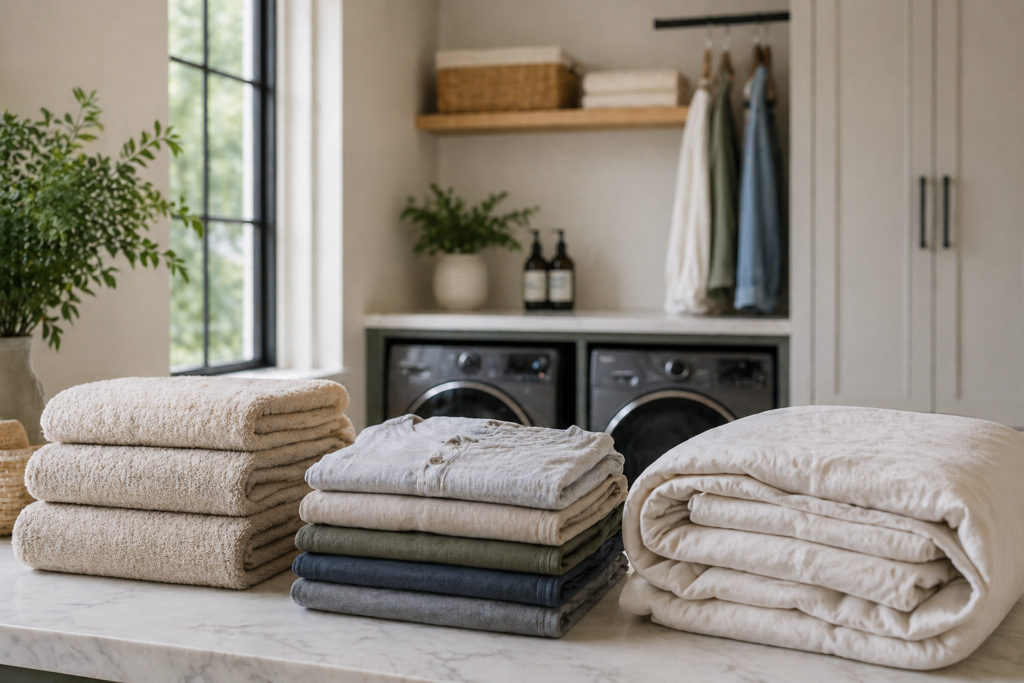
It’s common to wash a full load of laundry, have everything come out smelling clean, and then notice a pattern later: some items stay fine, while others develop a stale or musty odor. In humid homes, this isn’t random—and it isn’t just about how well the laundry was washed.
The difference comes down to how specific fabrics handle moisture, air, and residue over time. Two items washed under the same conditions can behave very differently once drying finishes and storage begins. This is why towels, bedding, and certain clothing items often become the problem—even when everything was cleaned the same way.
Why This Happens: It’s About Fabric Behavior, Not Just Cleaning
Laundry doesn’t end when the cycle stops. What matters is how completely moisture leaves the fabric—and how the fabric continues to behave afterward.
In humid environments:
- evaporation slows down
- air already contains moisture
- fabrics have fewer opportunities to fully release internal moisture
This means that even when items feel dry, some fabrics retain more internal moisture or compounds than others, and that difference becomes noticeable later.
Why This Item Smells Worse Than That One
This is the core of the problem.
When two items are washed together:
- one may release moisture and residue efficiently
- the other may hold onto both, even if it feels dry
Over time, especially in storage, that difference shows up as odor.
Direct comparisons make this clear:
- A cotton towel vs a cotton T-shirt
The towel is thicker and more absorbent. It holds water deeper within its fibers, so it takes longer to fully release that moisture. Even when it feels dry, it’s more likely to develop odor later. - Bedding vs everyday clothing
Bedding layers trap moisture between folds and surfaces. Once stored, airflow is limited, allowing any retained moisture to linger longer than in lighter clothing. - Synthetic workout clothing vs natural fibers
Synthetics don’t absorb water the same way, but they trap oils and detergent residue. Those compounds can react over time, creating persistent odor even when the item was washed properly.
This is why the issue often appears uneven. It’s not the load—it’s the material.
How Different Fabrics Behave in Humid Conditions
| Item Type | Fabric Behavior | Why It Smells Sooner Than Others |
| Towels | Thick, highly absorbent | Holds internal moisture longer than lighter fabrics |
| Bedding (sheets, comforters) | Layered, dense surfaces | Traps moisture between folds and layers |
| Cotton clothing | Absorbs moisture readily | Can retain moisture if not fully released |
| Synthetic/athletic wear | Traps oils and residue | Odor compounds build and persist over time |
| Blended fabrics | Mixed behavior | Combine moisture retention and residue trapping |
The key difference isn’t just how much water a fabric holds—it’s how easily it lets go of it.
Why “Dry” Doesn’t Mean Fully Resolved
A major source of confusion is that fabrics can feel dry on the surface while still holding internal moisture or compounds.
This happens because:
- outer fibers dry faster than inner layers
- thicker materials trap moisture internally
- residual warmth can mask early odor
In a dry environment, this often resolves naturally. In a humid home, it doesn’t. Once the item is folded or stored, airflow drops, and that retained moisture becomes more noticeable.
This is often when people think:
- the laundry wasn’t cleaned properly
- or something is wrong with the closet
In reality, the fabric never fully stabilized after washing.
How Laundry Products Affect Different Fabrics
What you use in the wash doesn’t affect all fabrics equally.
Detergent
Using too much detergent can:
- leave residue in fibers
- make thicker fabrics hold moisture more easily
- create a base for odor over time
This tends to affect:
- towels
- bedding
- dense cotton items
more than lighter clothing.
Fabric softeners and scent additives
These products coat fibers. In humid homes, that can:
- reduce airflow within the fabric
- trap moisture and compounds
- make odor develop later
This is why:
- items smell strongly “clean” at first
- but shift to stale or musty after sitting
Why Storage Makes Certain Items Worse
Once fabrics are put away, their behavior continues to matter.
Closets:
- limit airflow
- hold humidity
- allow fabrics to sit undisturbed
This amplifies the differences between fabrics.
For example:
- a lightly worn shirt may stay fine
- a folded towel may develop odor
not because the closet is the only issue, but because the towel carried more internal moisture into that space.
This is where the connection to closet-related odor becomes clear. Storage doesn’t create the problem—it reveals it.
What Actually Helps (Based on Fabric Type)
A single approach doesn’t work for all laundry. The goal is to adjust based on how each fabric behaves.
Towels and thick fabrics
- Allow extra drying time beyond the standard cycle
- Avoid folding immediately while still warm
- Store with space rather than tight stacking
Bedding and blankets
- Ensure full drying, including inner layers
- Avoid compressing into dense storage
- Rotate regularly instead of long-term storage
Synthetic and performance fabrics
- Use less detergent to reduce residue
- limit fabric softener use
- allow additional air exposure after drying
Everyday clothing
- Avoid overloading the washer to improve rinse quality
- allow time to cool and release residual moisture before storing
A Note on Moisture Behavior in Indoor Environments
Fabric performance is closely tied to indoor humidity conditions.
The American Society of Heating, Refrigerating and Air-Conditioning Engineers provides widely referenced guidance on indoor environmental conditions. Their research consistently shows that elevated humidity affects how materials—including fabrics—retain and release moisture over time.
In practical terms, this means that in humid homes, fabrics are more likely to hold onto small amounts of moisture after washing, especially when airflow is limited.
Professional Insight
“Different fabrics respond to moisture based on their structure and density. Thicker and more absorbent materials can retain moisture internally even when they feel dry, while synthetic materials may trap residues that contribute to odor over time. In humid environments, these differences become more noticeable because the conditions don’t allow fabrics to fully stabilize before they’re stored.”
— Indoor air and moisture behavior specialist
Frequently Asked Questions
Why do my towels smell but my clothes don’t?
Towels are thicker and absorb more water than most clothing. They take longer to fully release internal moisture, which makes them more likely to develop odor after washing.
Why does bedding smell stale after sitting?
Bedding traps moisture between layers and folds. When stored, airflow is limited, allowing that moisture to linger longer than in lighter fabrics.
Why do synthetic clothes hold odor differently?
Synthetic fabrics tend to trap oils and detergent residue rather than absorbing water deeply. Those compounds can build over time and become noticeable as odor.
Why does laundry smell fine at first but not later?
Freshly washed items may still contain slight moisture or residue that isn’t noticeable right away. Once stored in a low-airflow environment, those differences become more apparent.
Is this a laundry issue or a storage issue?
It’s usually both. Some fabrics carry more moisture or residue out of the laundry process, and storage conditions allow that to develop into odor over time.
Bottom Line
Some laundry fabrics hold odor more than others because they handle moisture and residue differently—not because they were washed differently.
Towels, bedding, and certain synthetic fabrics are more prone to developing odor because they either retain internal moisture longer or trap compounds that become noticeable over time. In humid homes, these differences are amplified.
Understanding why one item smells while another doesn’t allows you to:
- adjust how different fabrics are washed and dried
- give certain items more time to stabilize before storage
- store them in ways that reduce moisture buildup
The result is not just cleaner laundry—but laundry that stays consistent after it’s put away.